Cartoons you need to watch

The list in release order, from the earliest shorts onward. Showing 401–420 of 698.

Dec 1947

Woody the Giant Killer

Walter Lantz Productions

15 Dec 1947 00:07:00

Woody Woodpecker, hungry and broke, is talked into buying a magic bean by a pitchman and plants it; overnight the beanstalk goes up through the clouds, and Woody climbs it to find a castle and a giant, and a giant's larder.
Jan 1948

Base Brawl

23 Jan 1948 00:07:00

A baseball game between two teams of animals, with the sport's every convention turned into a gag: the pitcher's wind-up that never ends, the batter who swings at everything, the umpire who is blind, the outfielder who climbs the fence after a ball and keeps climbing, the base-stealer who literally…

Feb 1948

Mar 1948

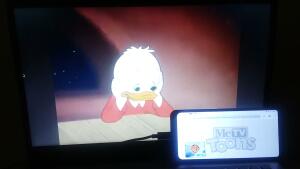
Drip Dippy Donald

05 Mar 1948 00:07:00

Drip Dippy Donald uses Disney's short-subject craft to turn a small problem into character comedy. A task, outing, meal, or social obligation becomes difficult because the lead character's personality keeps making it worse.

Apr 1948

The Bored Cuckoo

09 Apr 1948 00:08:00

A cuckoo in a cuckoo clock is sick of his job: every hour, on the hour, he must pop out and say the one word he knows, and he has said it for years. Through the window he sees the free birds in the garden and falls for a pretty canary.

May 1948

Once Upon a Wintertime

27 May 1948

Once Upon a Wintertime is built as a musical or seasonal segment rather than a conventional character short. Mood, song, and design carry the experience, with story kept light enough to let the visual rhythm lead.

Jun 1948

The Rattled Rooster

26 Jun 1948

The Rattled Rooster turns pursuit, rivalry, or domestic conflict into tightly timed animation. MGM's house style gives the violence weight and elegance: bodies squash, objects shatter, and music stitches the impacts together.

Jul 1948

The Truce Hurts

17 Jul 1948 00:07:59

The Truce Hurts turns pursuit, rivalry, or domestic conflict into tightly timed animation. MGM's house style gives the violence weight and elegance: bodies squash, objects shatter, and music stitches the impacts together.

Oct 1948

Lucky Ducky

09 Oct 1948 00:07:00

Lucky Ducky begins with a simple premise and then lets Tex Avery-style logic push it past ordinary sense. Scale changes, literalized language, impossible timing, or musical sabotage become the real story engine.

Soup's On

15 Oct 1948 00:06:00

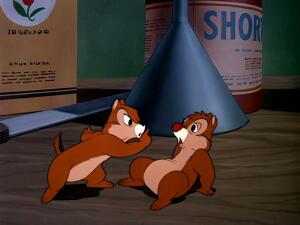
Soup's On uses Disney's short-subject craft to turn a small problem into character comedy. A task, outing, meal, or social obligation becomes difficult because the lead character's personality keeps making it worse.

Nov 1948

Three for Breakfast

05 Nov 1948

Three for Breakfast uses Disney's short-subject craft to turn a small problem into character comedy. A task, outing, meal, or social obligation becomes difficult because the lead character's personality keeps making it worse.

Dec 1948

Scaredy Cat

18 Dec 1948

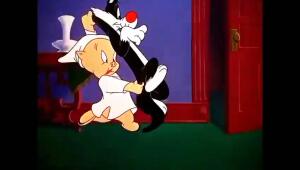
Scaredy Cat builds comedy around a strong Warner personality: Bugs' control, Daffy's instability, Porky's patience, Tweety's innocence, Sylvester's appetite, or Foghorn Leghorn's bluster. The plot is usually a trap designed to expose that personality.

Jan 1950

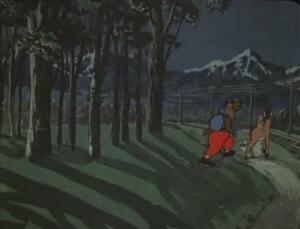
Audacious Mountaineers

01 Jan 1950 00:10:00

The surviving record points to a compact mountaineering cartoon built for quick theatrical readability, but not to a richly preserved scene-by-scene synopsis.

Boobs in the Woods

28 Jan 1950 00:07:00

Boobs in the Woods is a compact theatrical cartoon built around a clear comic or musical premise. Its structure reflects the demands of short-subject exhibition: start quickly, escalate cleanly, and leave a memorable final gag or image.

Feb 1950

Cinderella

15 Feb 1950

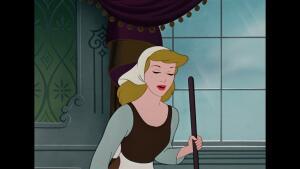
Cinderella uses fairy-tale structure to organize romance, transformation, comic side characters, and a heroine whose endurance is rewarded by magic and recognition. The story is familiar, but Disney's version turns objects, animals, and songs into emotional architecture.

Mar 1950

Apr 1950

Big House Bunny

22 Apr 1950 00:07:00

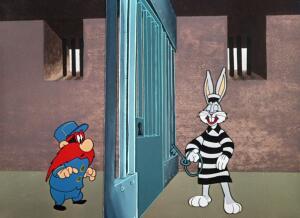
Big House Bunny builds comedy around a strong Warner personality: Bugs' control, Daffy's instability, Porky's patience, Tweety's innocence, Sylvester's appetite, or Foghorn Leghorn's bluster. The plot is usually a trap designed to expose that personality.