Cartoons you need to watch

The list in release order, from the earliest shorts onward. Showing 441–460 of 698.

Feb 1952

Magical Maestro

09 Feb 1952 00:06:00

Magical Maestro begins with a simple premise and then lets Tex Avery-style logic push it past ordinary sense. Scale changes, literalized language, impossible timing, or musical sabotage become the real story engine.
Apr 1952

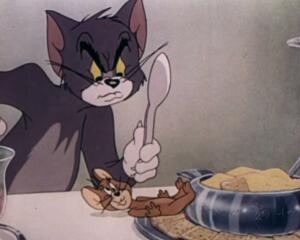
Smitten Kitten

12 Apr 1952 00:08:00

Smitten Kitten turns pursuit, rivalry, or domestic conflict into tightly timed animation. MGM's house style gives the violence weight and elegance: bodies squash, objects shatter, and music stitches the impacts together.

Let's Stick Together

25 Apr 1952 00:07:00

Let's Stick Together uses Disney's short-subject craft to turn a small problem into character comedy. A task, outing, meal, or social obligation becomes difficult because the lead character's personality keeps making it worse.

Jun 1952

The Scarlet Flower

06 Jun 1952 00:42:00

The Scarlet Flower draws on folk or literary tradition and uses feature-length animation to build a national fairy-tale world. Its value is not only in story, but in showing another production culture answering the same long-form animation challenge as Disney.

Little Runaway

14 Jun 1952 00:07:00

Little Runaway turns pursuit, rivalry, or domestic conflict into tightly timed animation. MGM's house style gives the violence weight and elegance: bodies squash, objects shatter, and music stitches the impacts together.

Sep 1952

Mouse Warming

08 Sep 1952 00:07:00

Mouse Warming turns pursuit, rivalry, or domestic conflict into tightly timed animation. MGM's house style gives the violence weight and elegance: bodies squash, objects shatter, and music stitches the impacts together.

Oct 1952

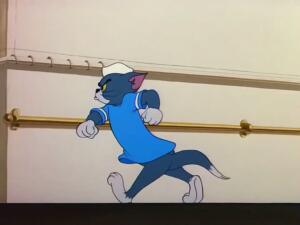
Cruise Cat

18 Oct 1952 00:07:00

Cruise Cat turns pursuit, rivalry, or domestic conflict into tightly timed animation. MGM's house style gives the violence weight and elegance: bodies squash, objects shatter, and music stitches the impacts together.

The Great Who-Dood-It

20 Oct 1952

The Great Who-Dood-It is a compact theatrical cartoon built around a clear comic or musical premise. Its structure reflects the demands of short-subject exhibition: start quickly, escalate cleanly, and leave a memorable final gag or image.

Dec 1952

Big Bad Sindbad

12 Dec 1952 00:08:00

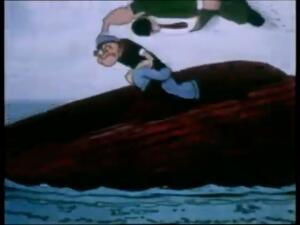
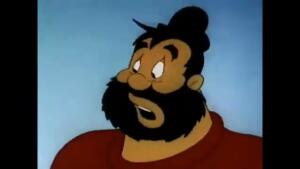
Popeye, in his comic-strip sailor whites, takes his nephews to a maritime museum. They stop in front of an enormous statue of Sindbad the Sailor, which the nephews admire as the greatest sailor who ever lived. Popeye sets them straight: he once met Sindbad, and he tells them how.

Busybody Bear

20 Dec 1952

Busybody Bear turns pursuit, rivalry, or domestic conflict into tightly timed animation. MGM's house style gives the violence weight and elegance: bodies squash, objects shatter, and music stitches the impacts together.

Jan 1953

Ancient Fistory

30 Jan 1953 00:07:00

Cinderella retold with the Popeye cast. Popeye is the drudge in the kitchen of a castle where his cruel master, Bluto, is preparing for the princess's ball, at which Princess Olive will choose a husband. Bluto leaves Popeye scrubbing floors and goes off in his finery.

Feb 1953

Duck Amuck

05 Feb 1953

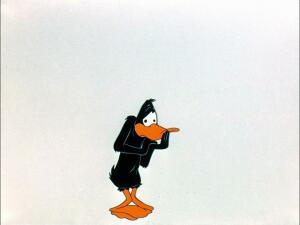
Duck Amuck begins like a costume adventure for Daffy Duck, then strips away scenery, sound, body, color, and continuity. Daffy is not fighting another character so much as the unseen hand controlling his film.

Peter Pan

11 Feb 1953

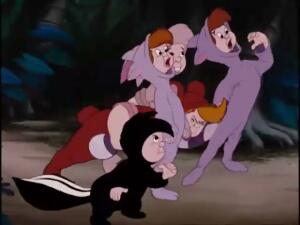
Peter Pan uses a feature-length fantasy frame to turn childhood, romance, danger, or domestic life into polished Disney spectacle. Its story depends on music, character animation, and a carefully controlled emotional arc.

Dec 1953

The Tell-Tale Heart

17 Dec 1953 00:08:00

A man narrates his story, insisting all the while that he is not mad. He lives in the same house as an old man, whom he says he loved and who never wronged him. But the old man has a pale, filmy "vulture" eye, and the narrator becomes obsessed with it.

Jan 1954

Look Who's Driving

12 Jan 1954

Look Who's Driving belongs to the Famous Studios era, where Popeye, Casper, Little Audrey, and other characters carried older theatrical habits into the 1950s. The short usually starts with a clear gag premise and follows it cleanly.

Captain Hareblower

16 Jan 1954

Captain Hareblower builds a compact situation around a familiar Warner personality. The plot may involve hunting, disguise, hunger, music, or rivalry, but the real subject is how quickly the character's flaw takes over the film.

Feb 1954

Apr 1954