
Studio: Fleischer Studios (Color Classics)
Distributor: Paramount Pictures
Produced by: Max Fleischer
Short Synopsis
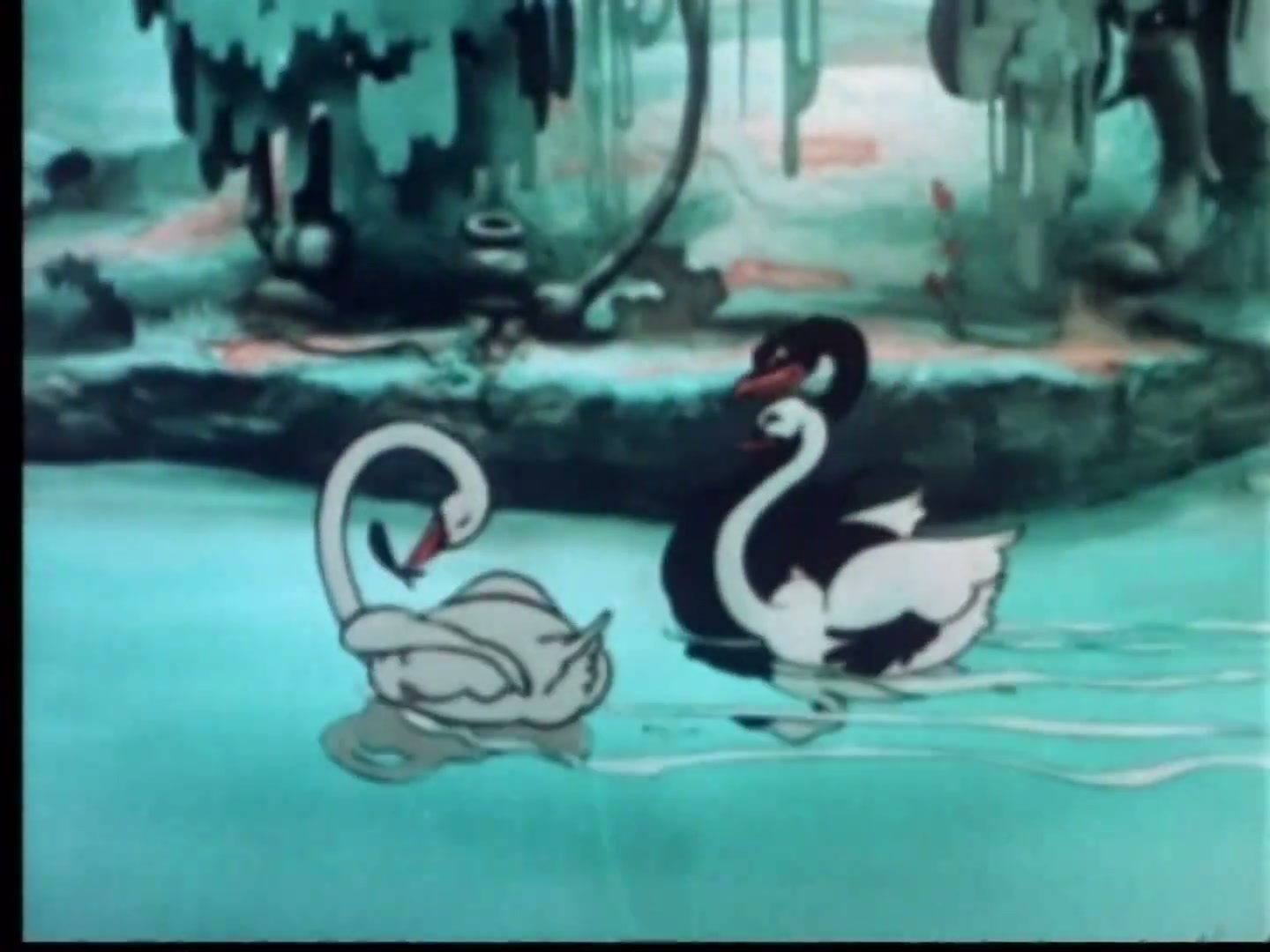
Two white swans on a lake are in love, gliding together and courting to the title song. A black swan arrives, greedy and swaggering, and sets about the female; dazzled, she leaves her mate for him, and the white swan is left alone and desolate. Life with the black swan is not what she expected. He is a bully who makes her catch his food and beats her when she fails, and when she brings him a frog instead of a fish he chases her across the lake. She flees to her old mate, who stands between her and the pursuer, and the two male swans fight, necks and wings flailing, until the black swan is driven off. The female, ashamed of her foolishness, asks forgiveness, and the white swan takes her back; the film ends with the pair gliding together as before.
Why It Matters
- A love triangle played entirely by swans, without a word of dialogue, is an unusual thing for a 1935 cartoon, and the Fleischers stage it with surprising delicacy, the swans' necks doing the acting; the black swan is a villain of some menace, and the fight on the water is well animated.
- The film is in the public domain in the United States, its copyright having lapsed with most of the series. It is one of the Color Classics that comes closest to the Silly Symphonies' manner, a nature story with a moral, and one of the few Fleischer cartoons with a heroine who errs and is forgiven.
Notes and Trivia
- Reliable credits for the animators are not recorded on the surviving prints, and the studio's own records give only the director.
- The swan courtship was rotoscoped in part from footage shot in a New York park.
- See also: The Song of the Birds (1935), Hawaiian Birds (1936), Dancing on the Moon (1935).


