
Studio: Fleischer Studios
Distributor: Paramount Pictures
Produced by: Max Fleischer
Short Synopsis
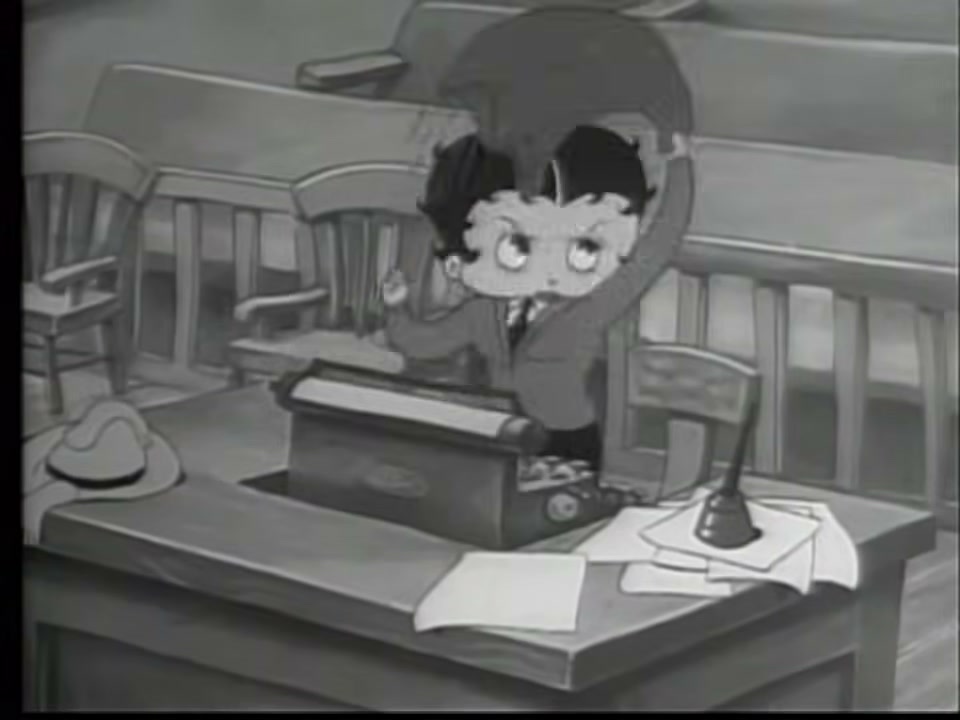
Betty is a stenographer at the courthouse. On the bus to work she suffers the usual public pests, a man blowing smoke in her face, a back-slapper, a gum-parker, and arriving at the empty courtroom she puts on the judge's robe, climbs into the chair and sings about what she would do if she were judge. Her sentences are shown one by one: the smoker, Public Pest No. 8, is tied up and made to inhale candle smoke; the back-slapper is strapped into a girdle and slapped by a mechanical arm that shouts "Hi ya, pa!"; the gum-parker is stuck in a room papered with chewing gum; the mud-splasher is tied to a lamp post and splashed by a car wheel; the man who uses all the hot water is bathed in ice cubes; the radio impersonator is strapped down and made to listen to himself. The townsfolk outside hear her through the window, cheer every verdict, and elect her judge on the spot.
Why It Matters
- The catalogue of pests and punishments is a small social document of 1935 city life, with second-hand smoke, parked gum and radio impressionists among the crimes, and the mechanical contraptions that deliver the sentences are Fleischer machinery at its most inventive.
- The film is in the public domain in the United States, and it is the post-Code Betty at her most public-spirited, a working woman with opinions, which was the studio's way of keeping her modern once the flapper was gone. Mae Questel's patter song carries the whole film.
Notes and Trivia
- The judge's numbered Public Pests parody the FBI's Public Enemy lists of the time.
- Frank Endres, uncredited here, animated Popeye cartoons into the 1950s.
- See also: Betty Boop and Grampy (1935), Making Stars (1935), The Candid Candidate (1937).


