
Studio: Fleischer Studios (Color Classics)
Distributor: Paramount Pictures
Produced by: Max Fleischer
Short Synopsis
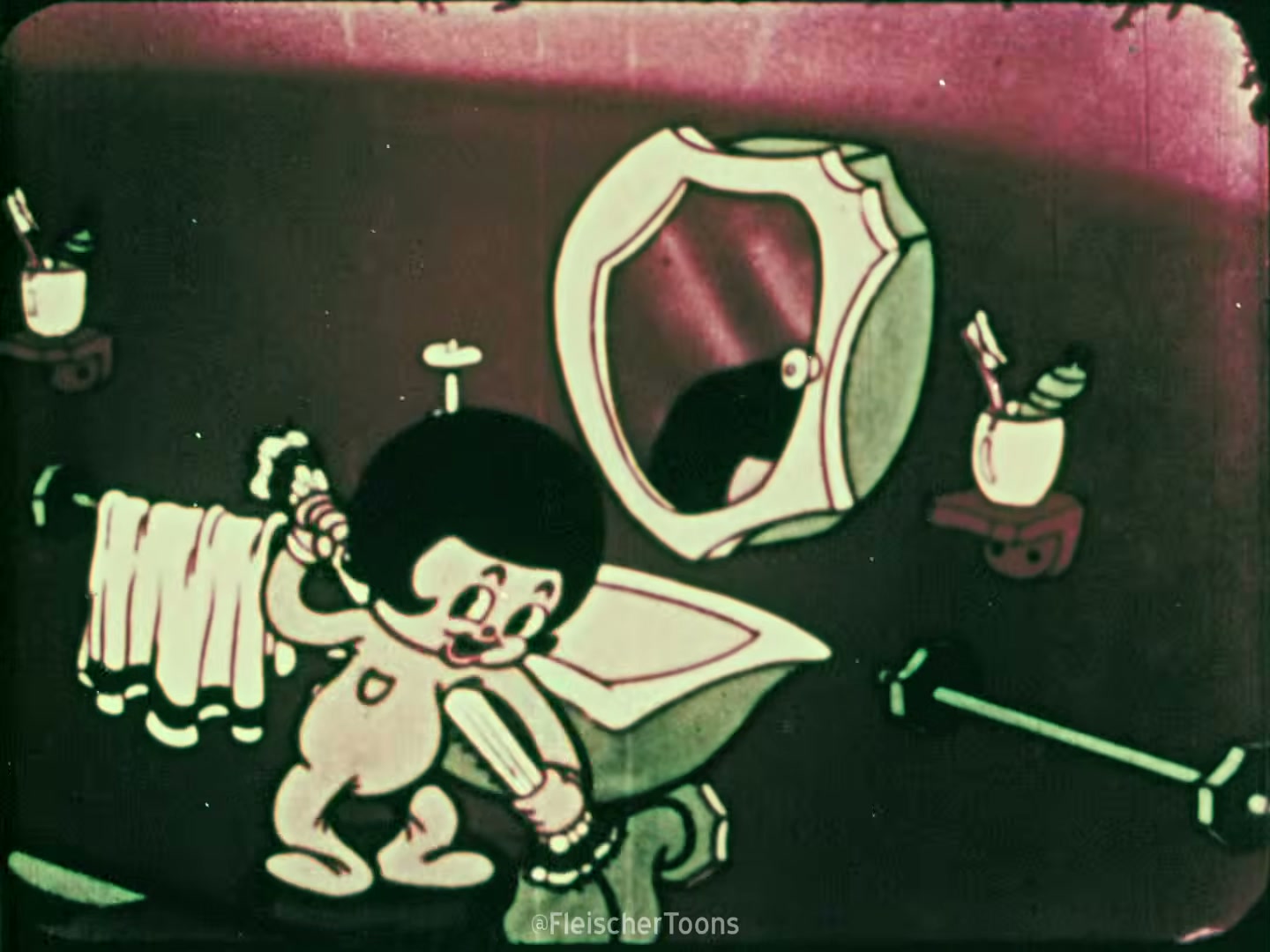
The old woman who lives in a shoe has so many children she does not know what to do, and the film shows her day. The children, all identical except the baby, whom she tends herself, are rebels by nature: they feed their broth to the cat, dodge the comb and the toothbrush, and turn washing-up into a water fight. "You didn't eat your broth and you didn't eat your bread, so go ahead and brush and hurry into bed!" she tells them. Once in bed they start a rowdy song, bouncing on the mattresses, and the shoe rocks with the noise. The old woman comes up with a bottle of castor oil and threatens a dose all round if they do not sleep, which quiets them at once. Downstairs she pours herself a glass from the bottle: it was apple cider all along, and she drinks it with relish as the film ends.
Why It Matters
- The old woman's castor-oil bluff is a good joke on a nursery rhyme that has none, and the shoe-house, with its lace-hole windows and tongue for a roof, is one of the series' better model sets; Myron Waldman's children, a swarm of identical small figures moving as one, are a nice piece of crowd animation.
- The film is in the public domain in the United States, its copyright among those NTA allowed to lapse, and it belongs to the first season of Color Classics, when the series was still finding its tone between fairy tale and gag cartoon.
Notes and Trivia
- The castor-oil threat was a real feature of 1930s childhood and a stock cartoon gag.
- Waldman went on to animate most of the Betty Boop Pudgy cartoons.
- See also: The Song of the Birds (1935), Greedy Humpty Dumpty (1936), Dancing on the Moon (1935).


