
Studio: Fleischer Studios
Distributor: Paramount Pictures
Produced by: Max Fleischer
Short Synopsis
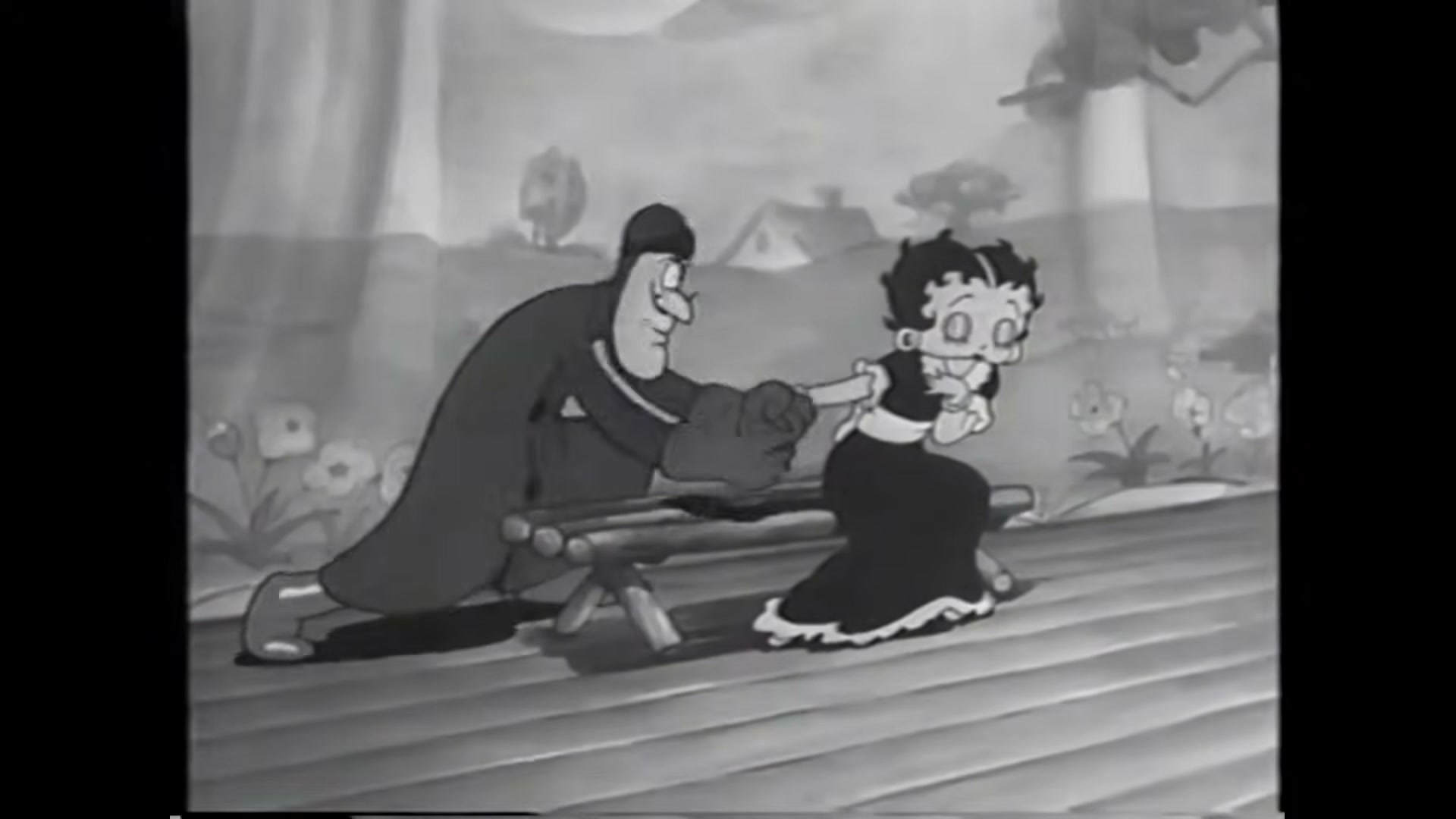
Betty is on stage in an old-fashioned melodrama, playing the heroine opposite her boyfriend Freddy as the hero and a moustachioed villain, Phillip the Fiend. The curtain rises on painted scenery and a hissing audience. Phillip ties Freddy to the railway tracks of the plot and turns to Betty with diamonds and furs, and she answers with the title song, a mock-Victorian refusal with a chorus the audience joins. Phillip kidnaps her anyway and escapes in a hot-air balloon; Freddy frees himself, gives chase across the painted flats, climbs the balloon's ropes and fights the villain in the basket, and Betty is returned to the stage, the villain punished and the audience applauding, with the cardboard theatre falling down around them.
Why It Matters
- The film is a parody of the melodrama revivals then fashionable in New York, where audiences hissed the villain and sang along, and the staging keeps the gag going by showing the theatre machinery, the footlights and the stagehands throughout; the title song became a small standard, recorded by dance bands in 1935.
- It is in the public domain in the United States, and it is the clearest example of how the post-Code Fleischers kept Betty's sexuality in play by making her a stage heroine refusing a stage seduction, which the Hays Office could hardly object to. Freddy, her new boyfriend, replaced Bimbo in these years.
Notes and Trivia
- The song, by Al Sherman, Al Lewis and Abner Silver, had been a hit for Jack Hylton's band.
- Paul Fennell, among the uncredited animators, later founded the Cartoon Films company.
- See also: Taking the Blame (1935), A Language All My Own (1935), Judge for a Day (1935).


