
Studio: Fleischer Studios (Color Classics)
Distributor: Paramount Pictures
Produced by: Max Fleischer
Short Synopsis
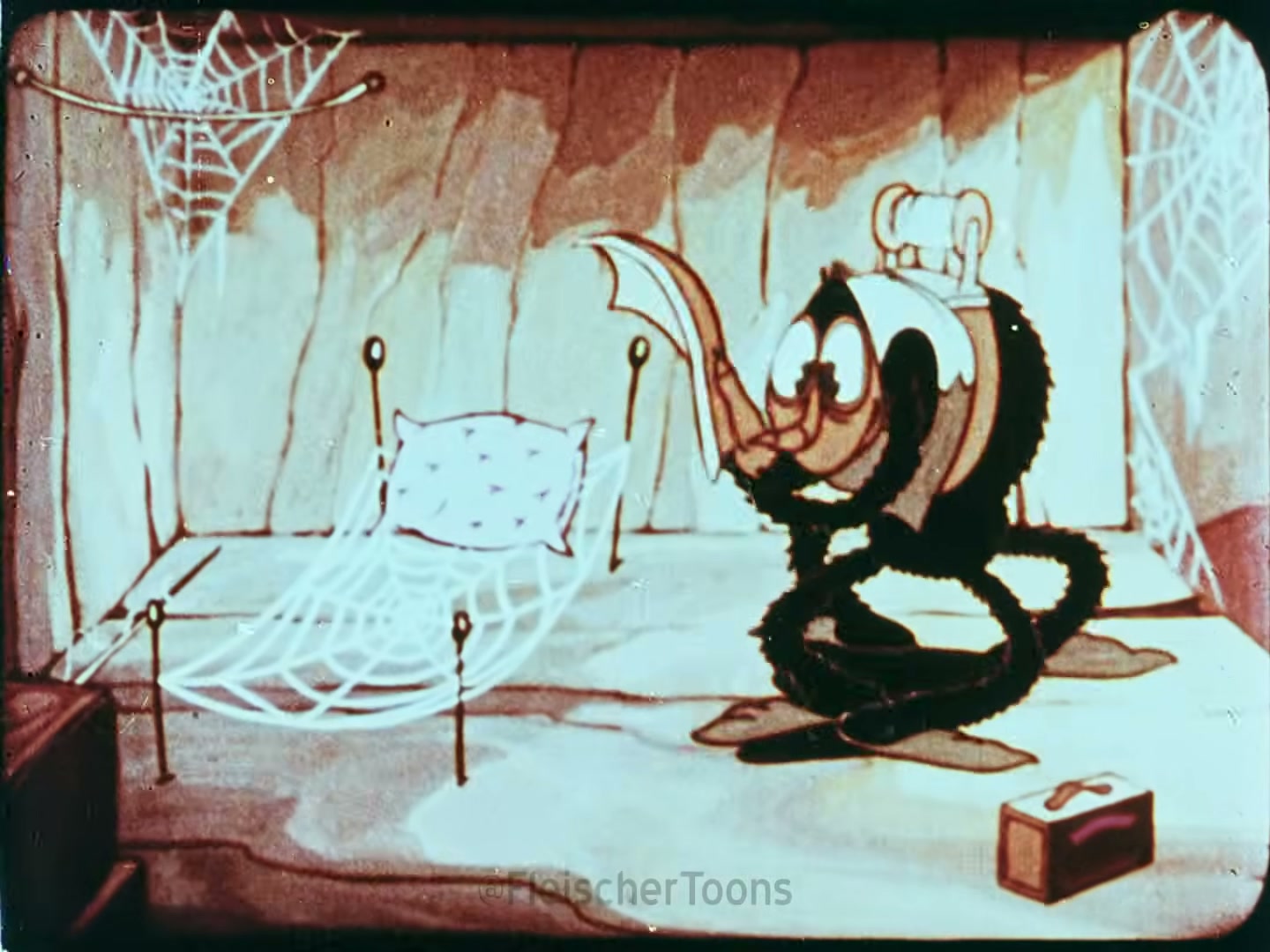
A spider runs a hotel for flies. The Cobweb Hotel looks inviting from outside, and the proprietor, a grinning spider with a doorman's manner voiced by Jack Mercer, welcomes a honeymooning fly couple and shows them to a room whose bed is a web. The hotel's other guests are already stuck fast in their rooms, and the spider plans to add the newlyweds to his larder. They discover the trap. The bride is caught in a web; the groom, a flyweight boxing champion, takes the spider on and is winning until he too is stuck. The bride works herself free and releases every captive in the building, and the flies turn on their host, firing pen nibs and aspirin tablets at him from the hotel stationery until he is routed. The couple hold their wedding again, with all the freed guests as congregation, and the film ends on the ceremony.
Why It Matters
- The spider innkeeper is one of the Fleischers' best villains, a smooth host with a pantry of corpses, and the hotel, a model set photographed in the stereoptical process, is a small masterpiece of design, with its web beds and its register of victims; the flies' revolt with office supplies is the kind of scaled-down warfare the studio loved.
- The film is in the public domain in the United States, and it is one of the two or three Color Classics most often named as the series' best; Joe Oriolo, among the uncredited animators, later created Casper, and the film's horror-comedy tone is a direct ancestor.
Notes and Trivia
- William Turner, who wrote the story, was the Fleischers' main story man in the mid-1930s.
- The spider's sales patter parodies the resort-hotel advertising of the period.
- See also: The Little Stranger (1936), Greedy Humpty Dumpty (1936), Betty Boop's Museum (1932).


