
Studio: Famous Studios
Distributor: Paramount Pictures
Produced by: Sam Buchwald
Short Synopsis
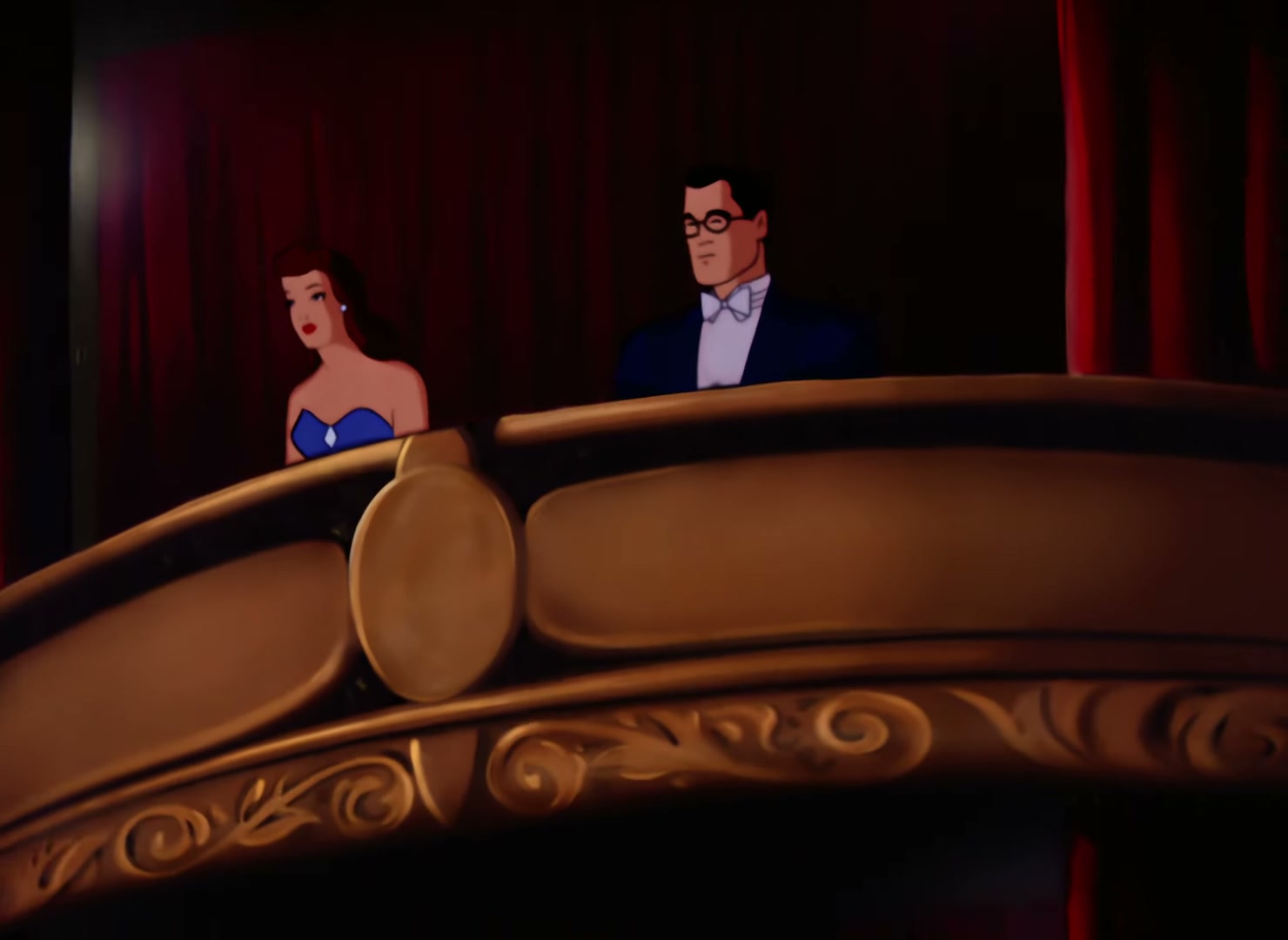
A crook working for a gangster called the Boss has been committing robberies dressed as Superman, and every paper in the city says Superman has gone bad. Lois does not believe it. She and Clark are sent to the opera, where the impostor creeps from box to box lifting jewels; Lois grabs him and tears the S off his chest, and in the dark she becomes convinced that it really is Superman. Clark follows the thief to the roof, where the real Superman confronts him; the impostor shoots him, is driven off the edge and caught, and in the searchlights Lois and the police see two Supermen. Hoping for leniency the impostor leads Superman to the Boss, who drops him through a trapdoor, pushes a desk over it and hides in a vault, then cuts through the wall with a torch and flees by car. Superman stops a head-on crash with a police car and hands both men over. Back at the office Clark says he dreamed he was Superman. "A fine Superman you'd make," Lois says. "Well, I can dream, can't I?"
Why It Matters
- The impostor plot is the series' only real detective story, with Superman standing silent in front of the Boss's desk waiting for him to incriminate himself, and the two-Supermen reveal in the searchlights is cleverly staged.
- It is the first entry on which the Famous Studios name appears, and the first to abandon the science-fiction menaces of the Fleischer films for ordinary gangsters, a sign of the tighter budgets that followed Paramount's takeover. Like the rest of the series it is in the public domain.
Notes and Trivia
- Lee Royce and Barbara Willock voice Clark and Lois here in place of Bud Collyer and Joan Alexander.
- The closing exchange was reused almost word for word in later Superman radio episodes.
- See also: Superman: Japoteurs (1942), Superman: Eleventh Hour (1942), Superman: Destruction Inc. (1942).


