
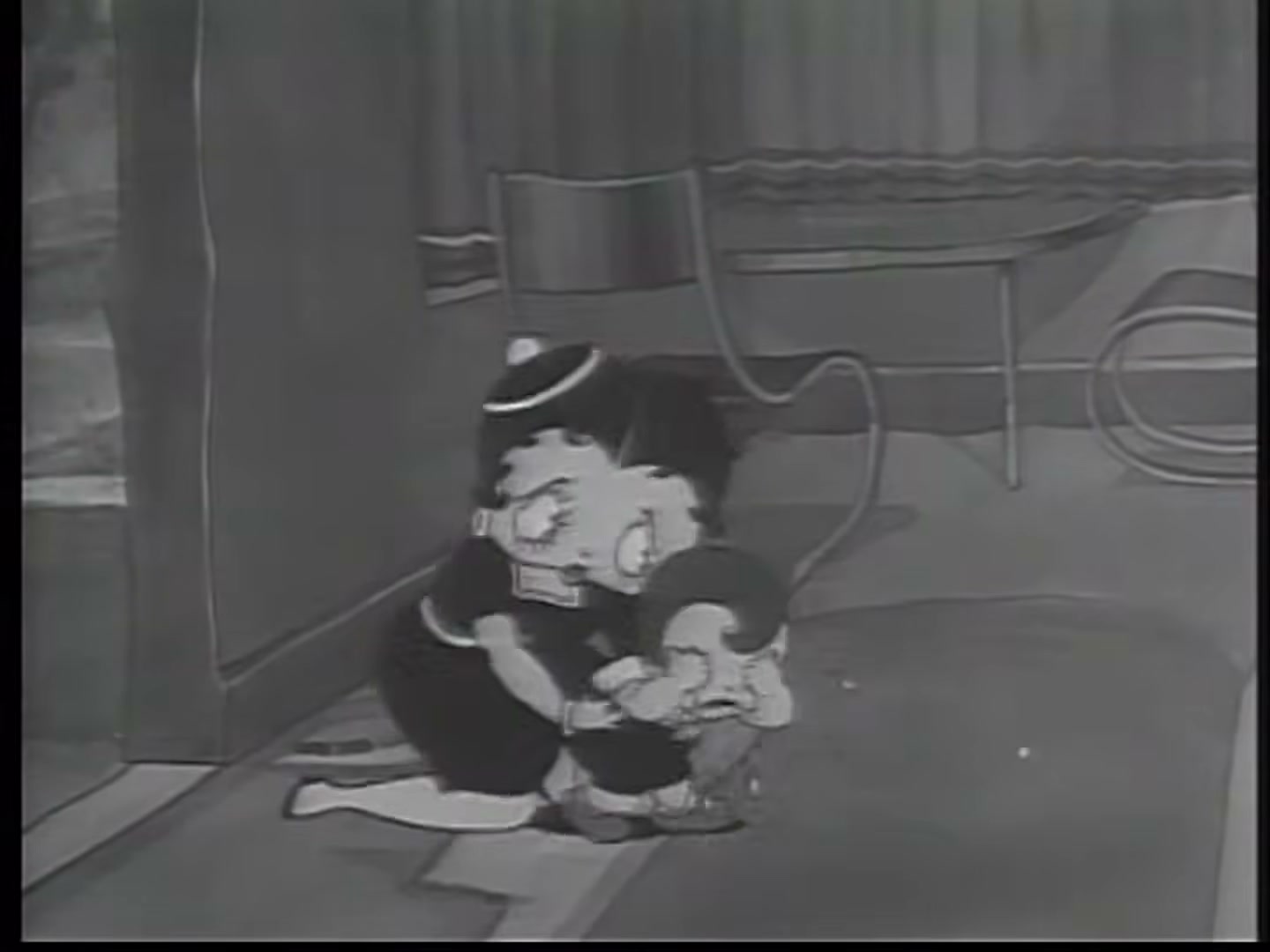
Studio: Fleischer Studios
Distributor: Paramount Pictures
Produced by: Max Fleischer
Short Synopsis
Betty has promised to take her nephew Junior to the carnival, and he is dressed and bouncing with excitement when the sky darkens, thunder rolls and the rain comes down in sheets. The carnival is off, and Junior is in tears. Grampy, who lives upstairs, hears the wailing, puts on his thinking cap and brings the carnival indoors. With the contents of the apartment he builds a merry-go-round from the dining table and the chairs, a shooting gallery from the kitchen, a ferris wheel from a bicycle and a clothes rack, a roller coaster from the stairs, with popcorn and lemonade dispensed by household machinery, and when the apartment runs out of room he rigs the whole building under a giant umbrella so that the fun can spread to the yard. Junior, Betty and Grampy ride everything, and the rain is forgotten.
Why It Matters
- Grampy's improvised carnival is the most elaborate of all his inventions, a whole fairground built out of furniture, and David Tendlar and William Sturm animate the machines with the mechanical logic the Fleischers prized, every ride clearly made of something recognisable; the house-sized umbrella is the film's best image.
- The film is in the public domain in the United States and is one of the best-liked Grampy cartoons; Margie Hines, later the voice of Olive Oyl, plays Junior, and Everett Clark's Grampy, cackling through his dance, is at his most infectious.
Notes and Trivia
- Junior, Betty's nephew, had been introduced in Baby Be Good the year before.
- The indoor fairground was imitated in several later cartoons, including a Famous Studios Little Lulu.
- See also: Betty Boop and Grampy (1935), Baby Be Good (1935), House Cleaning Blues (1937).


