
Studio: Fleischer Studios (Color Classics)
Distributor: Paramount Pictures
Produced by: Max Fleischer
Short Synopsis
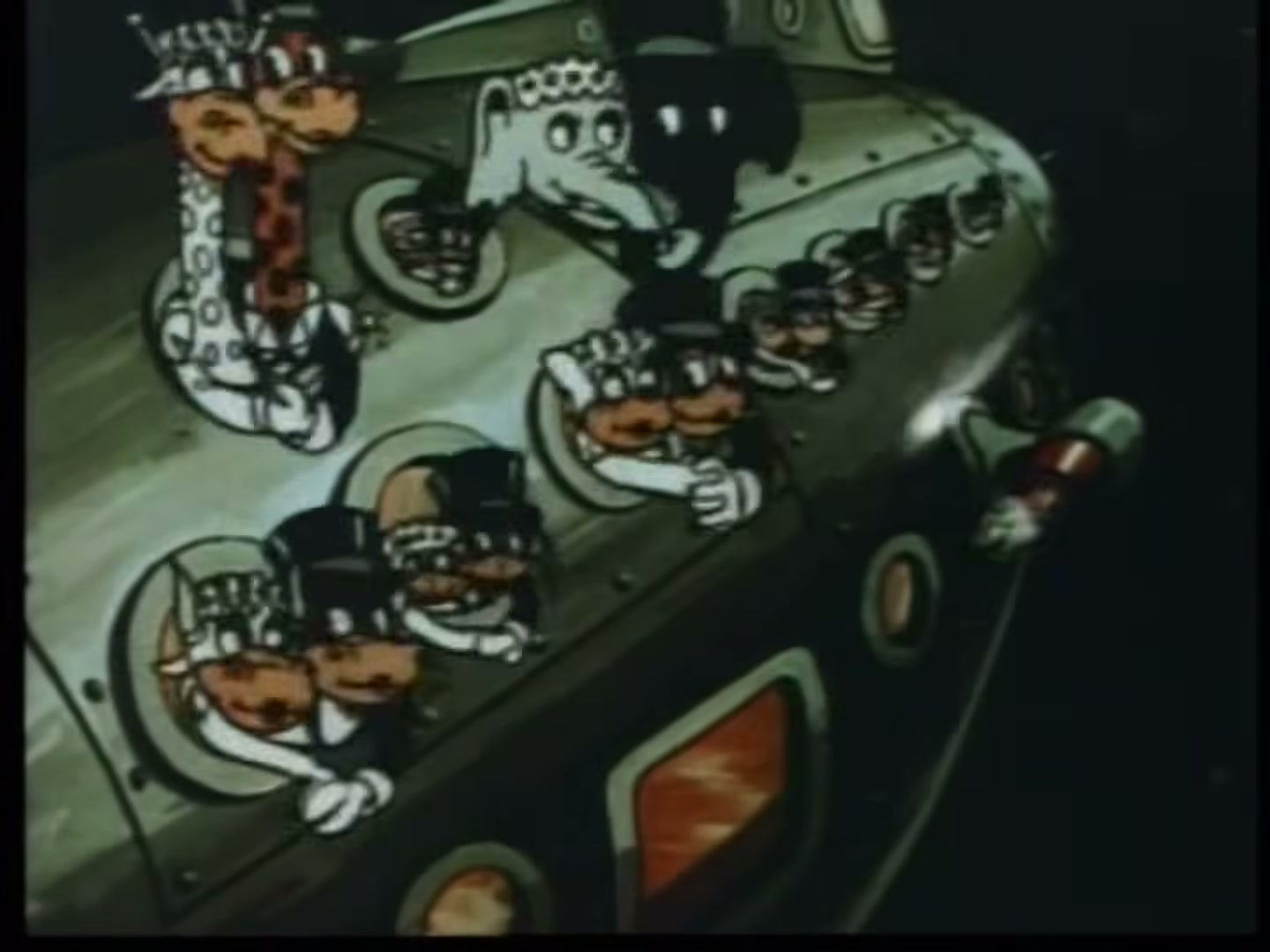
The Honeymoon Express to the Moon offers a ride for a dollar a couple, and the animal newlyweds climb aboard: cattle, penguins, elephants, bears, giraffes. A cat couple arrives late and the bride is left behind at the launch, so the tomcat spends the trip alone, playing solitaire and cat's cradle. On the Moon the eight couples find private corners to spoon; the giraffe at the base of his wife's neck remarks that it is a great place for necking, and she answers, in Mae West's voice, "Why don't you come up and see me sometime?" When the couples dance, the lonely cat dances by himself, sliding backwards in what the historian Jerry Beck has called the first moonwalk on film. Back on Earth the couples receive their deliveries from the stork, and the cat gets a kitten too, which he cannot explain.
Why It Matters
- The Color Classics were the Fleischers' answer to the Silly Symphonies, and this is one of the brightest, with the stereoptical process, a three-dimensional model set photographed behind the cels, giving the rocket's launch and the lunar landscape real depth. The Mae West gag and the cat's backward glide are the kind of touches that make the Fleischer films feel adult.
- Most of the Color Classics fell into the public domain when their copyrights were not renewed, and Dancing on the Moon has been one of the most-shown as a result; it is also the usual reference for the moonwalk's prehistory, half a century before Michael Jackson.
Notes and Trivia
- The title song by Tobias and Mencher was a minor hit of 1935.
- The stereoptical "setback" process was patented by Max Fleischer in 1933 and used in most Color Classics.
- See also: Somewhere in Dreamland (1936), Poor Cinderella (1934), Hunky and Spunky (1938).


