Studio: National Institute of Mental Health
Short Plot Synopsis
Curious Alice sits inside the 1969-1973 animation landscape, when television, adult features, international shorts, and post-studio theatrical work were all competing for attention.
The entry is valuable because it keeps one production mode visible: a national tradition, an educational film, a festival experiment, a literary adaptation, or a television format.
Why Is It Worth Watching?
- It shows animation working as education, persuasion, public messaging, or political memory rather than simple entertainment.
- It captures a moment when television animation, adult features, festival shorts, and international studios were reshaping what cartoons could be.
- It helps connect the decade's famous titles to the less obvious works that explain the medium's range.
Legacy And Impact
Curious Alice earns its place by widening the map around the famous landmarks of the period.
In this book, Curious Alice functions as a marker of animation moving through new audiences, new politics, and new distribution habits.
That makes the entry useful not only as an isolated title, but as part of the larger story of cartoons after the classic theatrical era.
Its value also comes from the way it records a changing production culture, where small studios and television pipelines could stand beside theatrical features.
Trivia
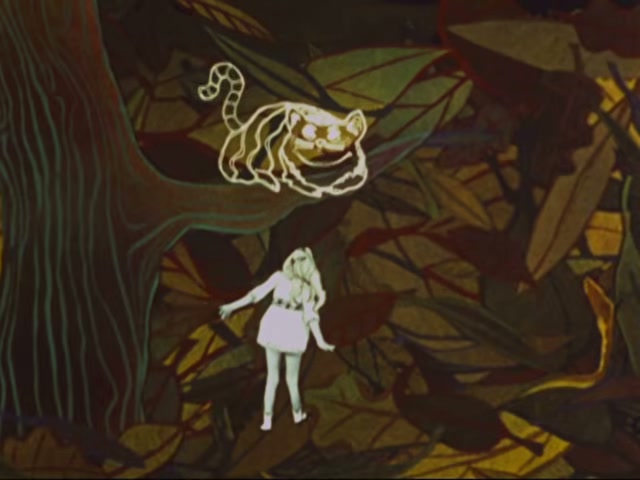
- The film borrows Alice imagery for drug education, turning fantasy logic into a cautionary classroom device.