Studio: Aardman Animations, Channel 4
Short Plot Synopsis
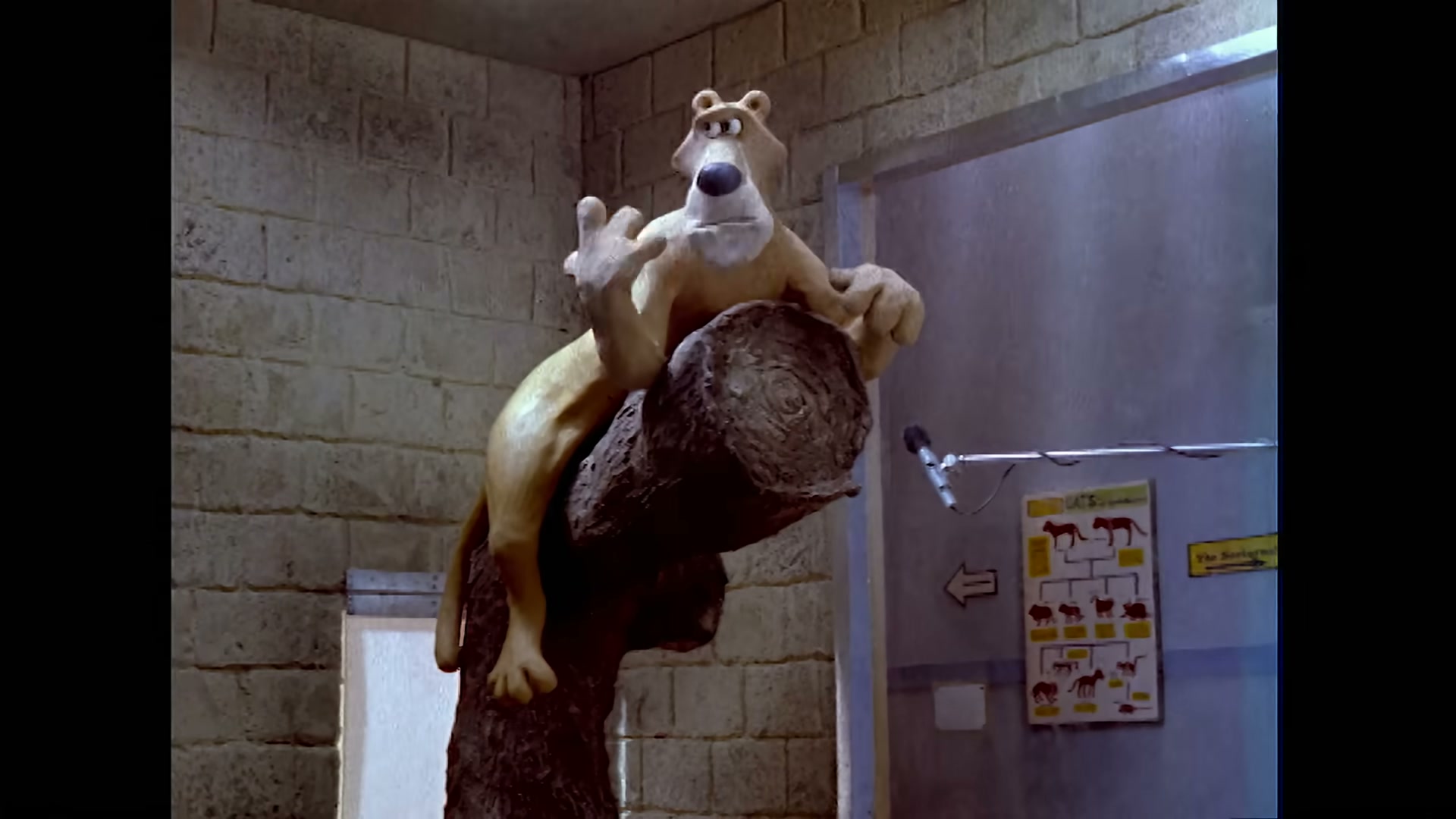
In a zoo, animals speak directly to camera about their living conditions, comforts, frustrations, and memories of home. Their dialogue is built from real interviews, creating the comic tension between ordinary human complaints and the bodies of captive animals delivering them.
The short is compact, but the idea is perfect: documentary realism filtered through clay animation. That contrast produces humor, sympathy, and social observation at the same time.
Why Is It Worth Watching?
- It is one of the defining Aardman shorts and a major milestone in British stop-motion animation.
- It shows how voice, character animation, and documentary technique can combine into something both funny and unexpectedly humane.
- Its success helped establish Nick Park as one of the central figures in late-20th-century animation.
Legacy And Impact
Creature Comforts matters because it distilled an entire approach to animated performance into a few minutes. The lip-sync timing, tiny body choices, and observational humor are so exact that the animals feel more recognizably human than many live-action comic characters.
The short was also historically important for Aardman. It confirmed that the studio's tactile stop-motion style could travel far beyond novelty and become a durable artistic signature. That path leads directly toward later work such as Wallace and Gromit and the broader international profile of British clay animation.
Its cultural afterlife is unusually rich for a short film. The concept was flexible enough to become commercials, television, and a recognizable comic format, but the original remains the sharpest version because it still feels fresh, specific, and slightly melancholy beneath the jokes.
Trivia
- The film won the Academy Award for Best Animated Short Film.
- Its dialogue was assembled from real recorded interviews rather than lines written for actors in a conventional script.