
Studio: Leon Schlesinger Productions (Merrie Melodies)
Distributor: Warner Bros. Pictures
Produced by: Leon Schlesinger
Short Synopsis
Two castaways, one tall and thin, one short and fat, drift on a raft, so hungry that they see each other and their own limbs as food. They reach an island and meet Bugs Bunny, who asks what the good word is; the answer is "Food!", and the chase begins, with Bugs swinging through the jungle on vines and the castaways setting up a cooking pot. Bugs disguises himself as a native chief, speaking a fake Polynesian made of English puns, and the two castaways in return are tattooed and dressed as "savages" in the island manner. The cartoon ends with the two still starving on their raft, now with a Hawaiian musical sendoff, and Bugs waving them off from the shore with a luau of his own.
Why It Matters
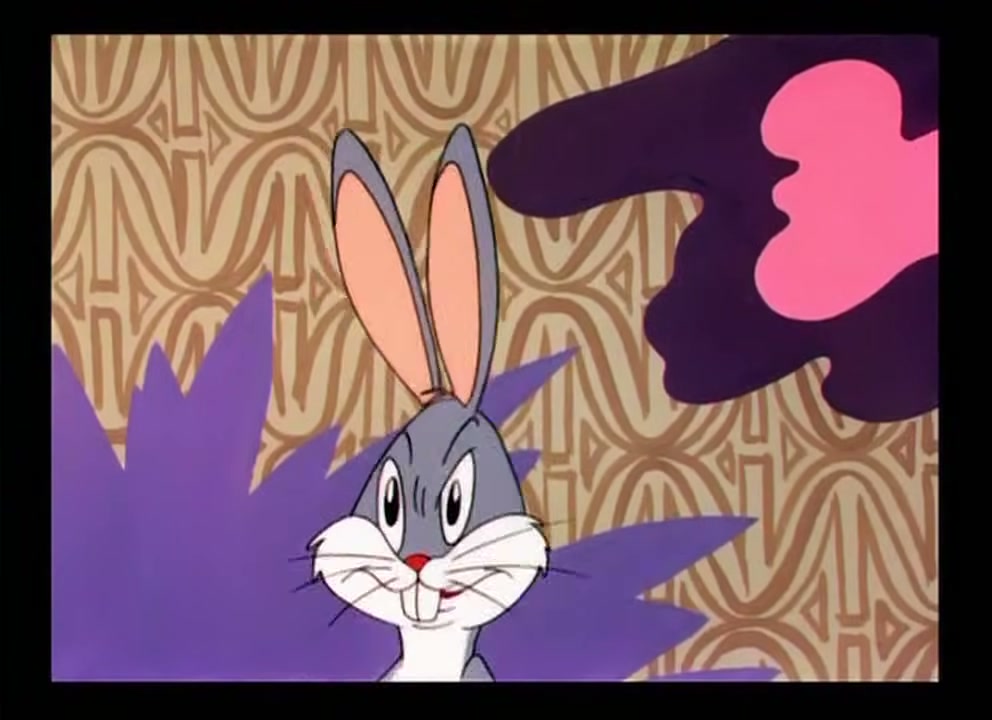
- The design is the point: John McGrew's layouts and Gene Fleury's backgrounds turn the jungle into flat, stylised planes of colour and pattern, years before UPA made that look fashionable, and the castaways, caricatures of the writers Michael Maltese and Tedd Pierce, who also voice them, are among Jones's funniest human figures. The cannibal-chief gag is dated; the drawing is not.
- Wackiki Wabbit is one of the Jones cartoons of 1943 in which his modernist streak, encouraged by McGrew and Fleury, was at its boldest, and it is in the public domain because United Artists failed to renew the copyright, which has made it one of the best-known of those films. It was restored and released on the Looney Tunes Golden Collection.
Notes and Trivia
- Maltese and Pierce, the two castaways, were the studio's two senior writers and frequent on-screen caricature subjects.
- The title plays on Waikiki, the Honolulu beach.
- See also: Case of the Missing Hare (1942), The Dover Boys (1942), Yankee Doodle Daffy (1943).


