
Studio: Leon Schlesinger Productions (Looney Tunes)
Distributor: Warner Bros. Pictures
Produced by: Leon Schlesinger
Short Synopsis
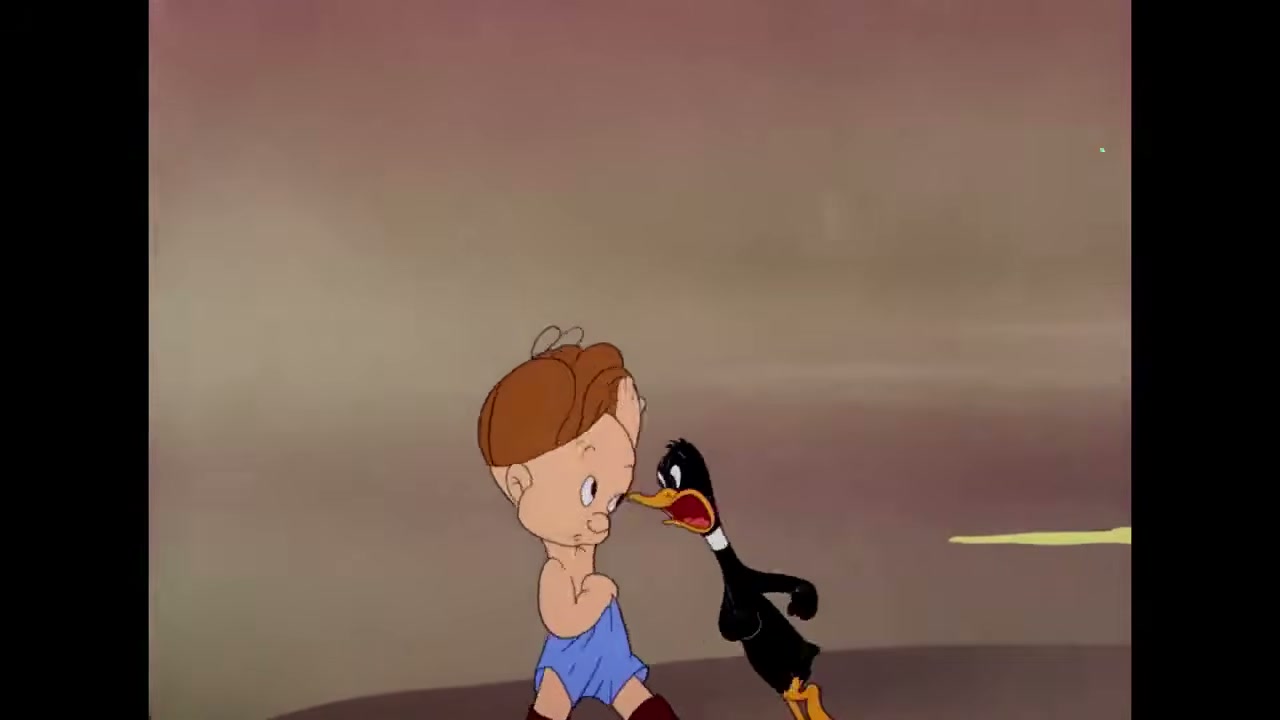
Elmer Fudd is duck hunting with his dog Laramore, missing Daffy with every shot and leaving duck-shaped holes in the clouds, until a load of buckshot blows off Daffy's tail feathers and brings him down onto a pillow the dog has thoughtfully placed. Elmer apologises; he had to shoot, he explains, because he is a great sportsman. Daffy is outraged at the idea of fair play with a shotgun and challenges Elmer to a fair fight, in a boxing ring that appears in the marsh, with a referee and an audience of ducks. The referee, a duck, disarms Elmer of everything down to his glasses and false teeth, the ducks cheer every low blow Daffy lands, and when Elmer finally protests the ducks declare it the fairest fight they have seen. Laramore, watching, is unimpressed, and the dog gets the last word.
Why It Matters
- Jones's Daffy is cooler here than Clampett's, and the "fair fight" sequence, in which the duck referee strips Elmer of his weapons and then his dignity while the crowd roars at every foul, is a perfect small satire of sportsmanship; the duck-shaped holes in the clouds are a Jones signature. The fat Elmer appears for one of the last times.
- The film entered the public domain in 1971 when United Artists failed to renew it, and it has been one of the most widely shown Daffy and Elmer cartoons as a result. It is also one of the first Jones cartoons in which his later style, deadpan, verbal and built on reaction, is fully visible.
Notes and Trivia
- Laramore the dog appears in only a few Jones cartoons of the period.
- The title puns on Hamlet, a habit the studio never lost.
- See also: Daffy Duck and the Dinosaur (1939), Yankee Doodle Daffy (1943), The Fifth-Column Mouse (1943).


