
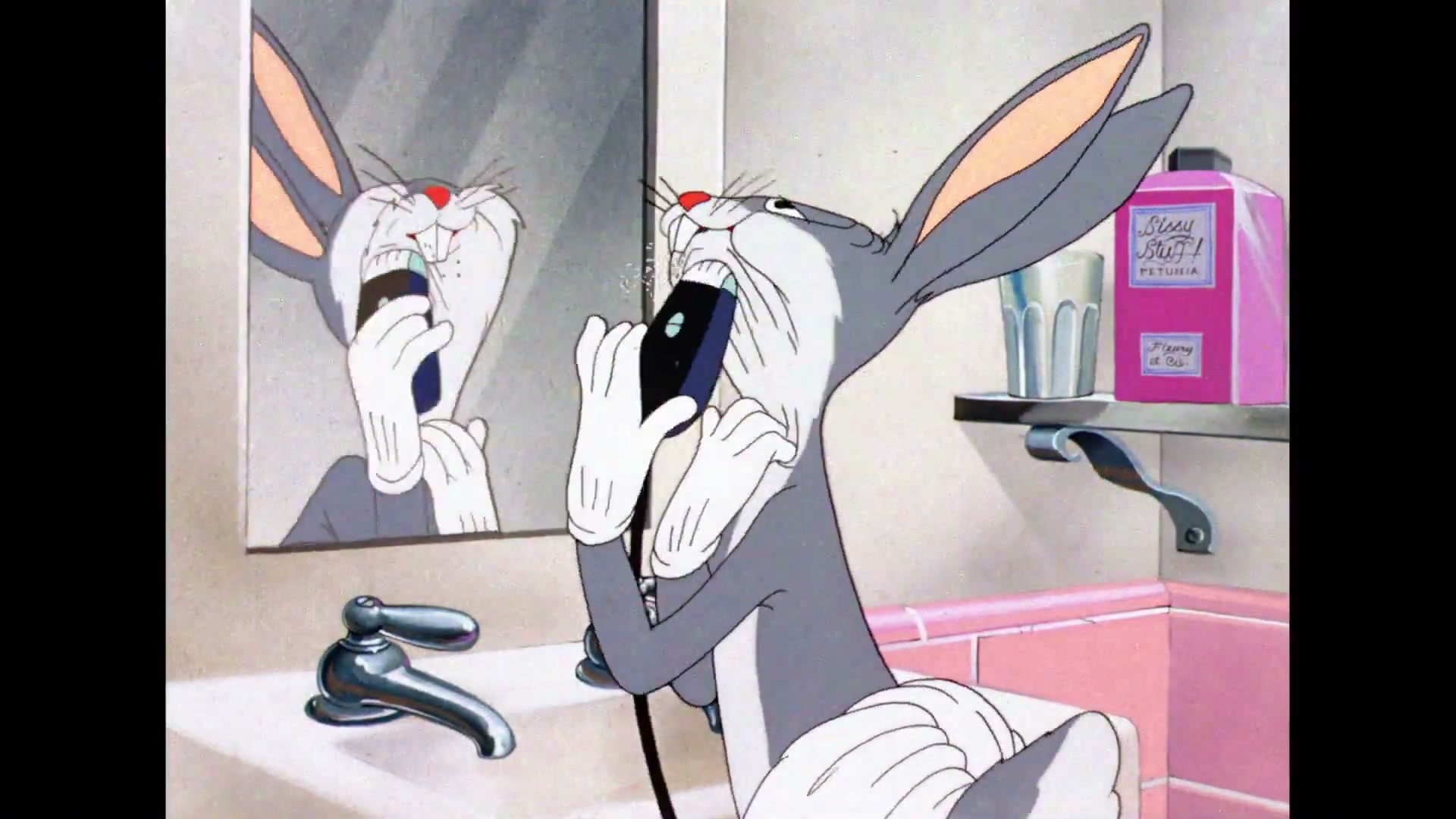
Studio: Leon Schlesinger Productions (Merrie Melodies)
Distributor: Warner Bros. Pictures
Produced by: Leon Schlesinger
Short Synopsis
Elmer Fudd and his hounds have Bugs Bunny cornered when a telegram arrives: Elmer's Uncle Louie has left him three million dollars, on condition that he harms no animals, especially rabbits. Elmer releases Bugs and goes home; Bugs follows him and moves in. He takes over the bathroom, eats Elmer's food, fakes a fatal illness to make Elmer weep over him, and whenever Elmer loses his temper reminds him of the inheritance. At last a second telegram arrives: after taxes, Uncle Louie's estate owes Elmer nothing, and he owes the government. Elmer, free, chases Bugs out of the house, only for the postman to deliver a package containing a baby rabbit, dressed as a baby, who announces himself as Uncle Louie's other heir.
Why It Matters
- The house-guest-from-hell premise, taken from the 1939 play The Man Who Came to Dinner, is the first time Bugs tormented Elmer at home rather than in the woods, and Maltese's script, with its fake death scene and the tax joke, is sharper than most 1942 cartoons; Freleng's Bugs is already the cool, slow-talking character rather than the screwball.
- It is in the public domain through non-renewal, so it has been one of the most-seen early Bugs cartoons, and it introduced the Bugs who manipulates rather than merely heckles. The fat Elmer design, used briefly in 1941-42, appears here too.
Notes and Trivia
- The title parodies The Man Who Came to Dinner, filmed by Warner Bros. in January 1942.
- The baby rabbit's closing line echoes the radio catchphrases of the day.
- See also: Elmer's Candid Camera (1940), The Wacky Wabbit (1942), Fresh Hare (1942).


