
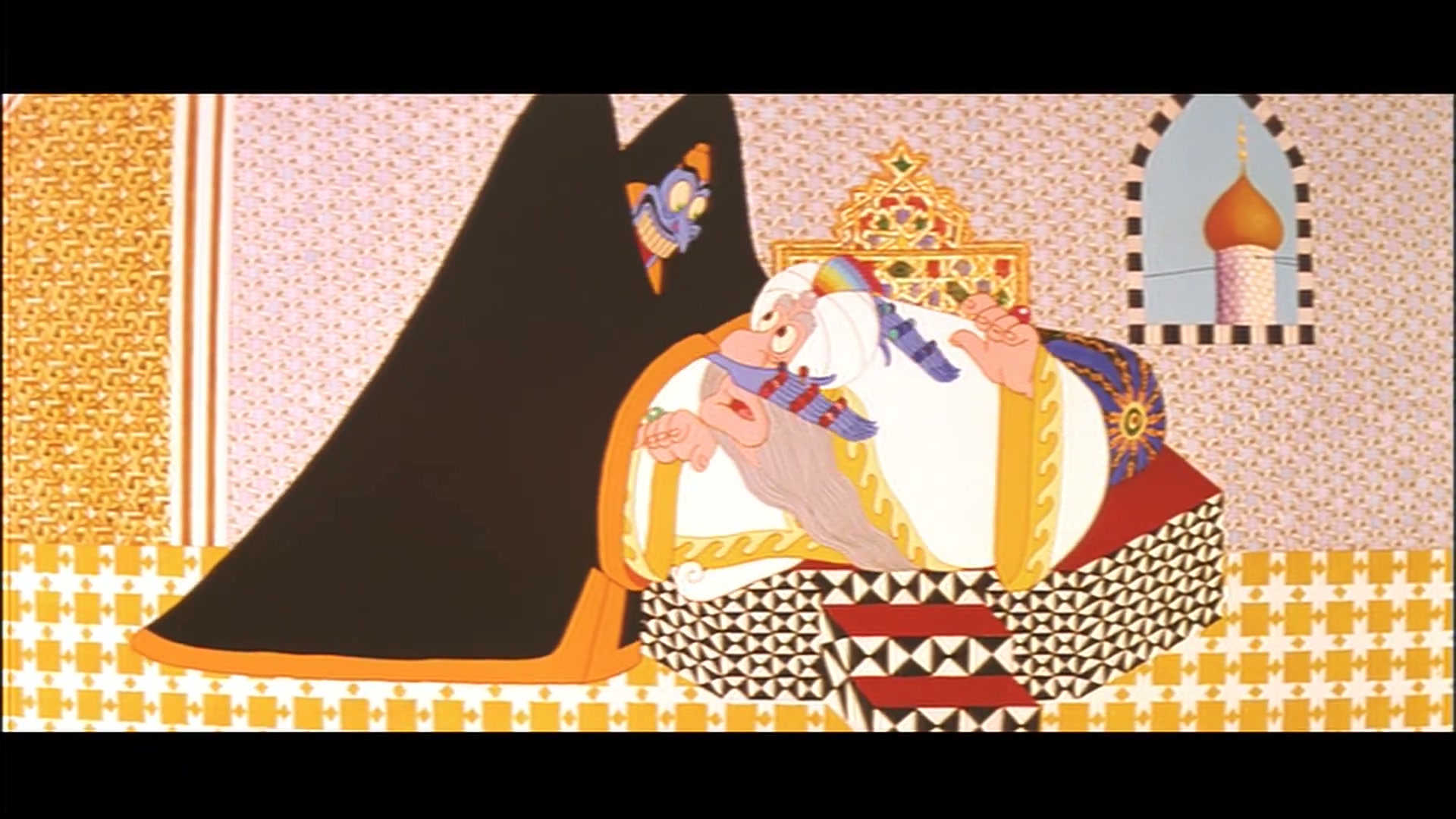
Studio: Allied Filmmakers, Richard Williams Animation
Short Plot Synopsis
In a stylized Middle Eastern kingdom, a silent cobbler, a mischievous thief, and a princess become entangled in a struggle involving prophecy, invasion, and a city protected by three golden balls. The surviving release version presents the story as a fractured fantasy spectacle, but even in compromised form its extraordinary animation dominates every scene.
The film is as famous for its tortured production history as for its content. What survives on screen is enough to show the ambition: impossible perspective gags, dense crowd movement, and some of the most intricate hand-drawn animation ever attempted in a feature.
Why Is It Worth Watching?
- It is one of animation history's great unfinished or mutilated masterpieces, yet still an essential object for understanding hand-drawn feature ambition.
- Richard Williams's draftsmanship, timing, and visual invention are visible throughout the surviving release.
- Its legend has shaped how animators and historians talk about perfectionism, production collapse, and lost masterpieces.
Legacy And Impact
The Thief and the Cobbler belongs in a canon because historical importance is not limited to clean success stories. Few animated features have generated such intense fascination among animators, restoration enthusiasts, and film historians. It became the emblem of an animation dream stretched past sustainability: visionary, obsessive, and repeatedly derailed.
Even in compromised release form, the film contains sequences that feel almost impossible by contemporary commercial standards. Richard Williams pursued a density of line, motion, perspective, and staging that links the feature to both classical cartoon craftsmanship and the ambitions of grand studio-era spectacle.
Its afterlife matters too. Workprints, reconstruction efforts, and discussion around the film helped create one of animation culture's clearest cases of canon through absence. The film is important not because the released cut is definitively complete, but because the surviving material makes the scale of the lost achievement unmistakable.
Trivia
- The project was in production for decades before reaching theaters in heavily altered form.
- Fans and historians later assembled "Recobbled Cut" reconstructions to approximate Richard Williams's intended version from surviving materials.


