
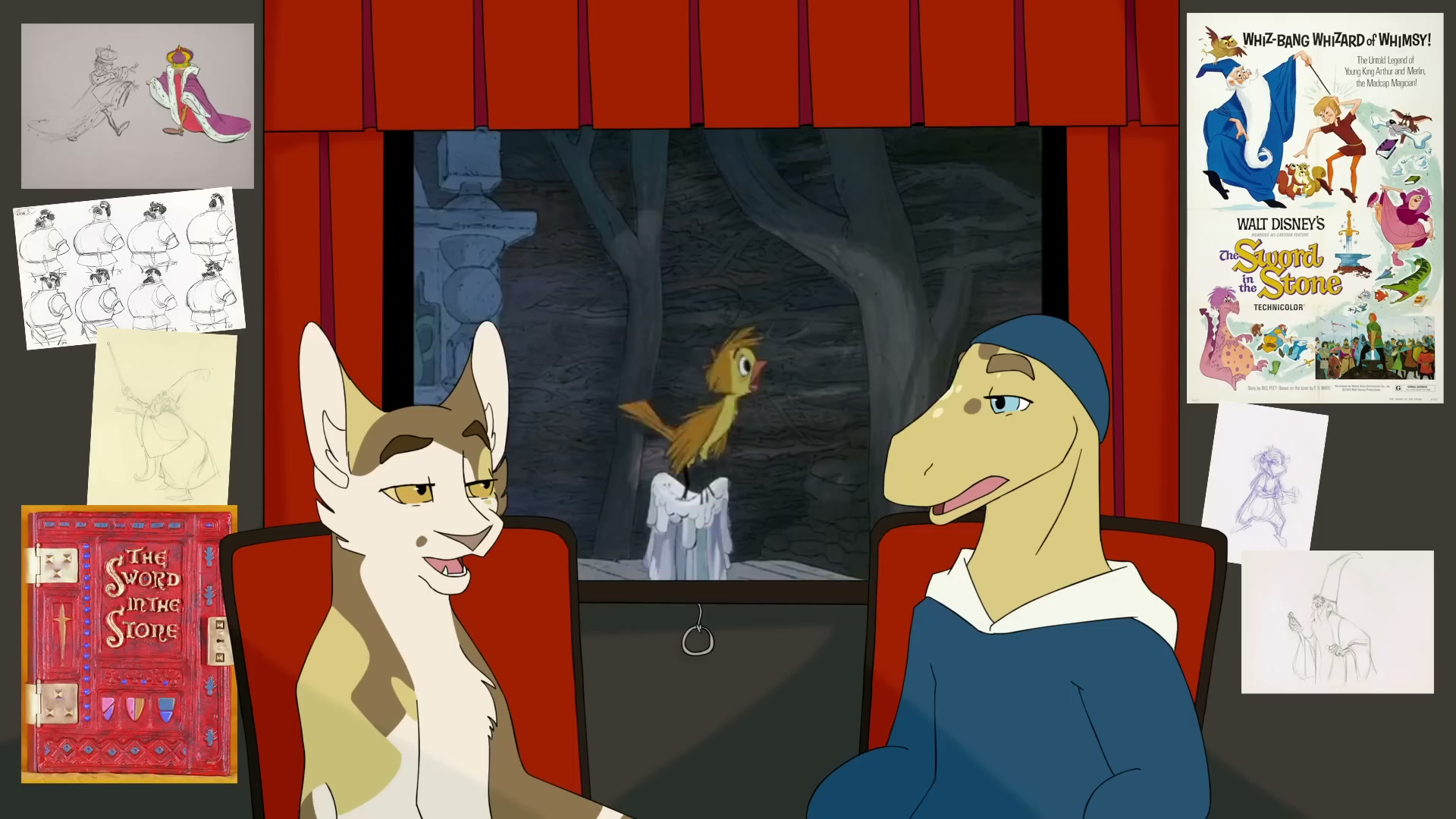
Studio: Walt Disney Productions
Short Plot Synopsis
The Sword in the Stone uses feature-length Disney craft to organize fairy tale, adventure, or animal comedy into a polished emotional arc. The film depends on music, voice casting, and character animation as much as plot.
Its best scenes are built around personality: a villain's rhythm, a comic side character's timing, or a design choice that tells the audience how to feel before anyone speaks.
Why Is It Worth Watching?
- It turns Arthurian education into loose comic episodes and marks a leaner Disney feature style.
- It captures a decade when theatrical shorts were fading while television, international features, and modernist shorts were taking up more space.
- It helps the book connect celebrated landmarks to the surrounding work that made the era legible.
Legacy And Impact
The Sword in the Stone shows Disney navigating the 1960s by balancing older storybook authority with leaner, more graphic production methods.
In this book, The Sword in the Stone works as a period marker: it shows how style, format, budget, and audience habits were being renegotiated between 1958 and 1967.
That makes the entry useful not just as a title to remember, but as evidence of how animation was finding new rooms, schedules, and audiences.
Trivia
- Three different boys voice Arthur, which gives Wart a subtly shifting sound across the film.


