Studio: Walt Disney Productions
Short Plot Synopsis
The Many Adventures of Winnie the Pooh sits in the post-Walt Disney landscape, where older studio craft met anthology habits, television reuse, and a more economical feature pipeline.
Its value is partly industrial: it shows how character animation survived while the business around it kept changing.
Why Is It Worth Watching?
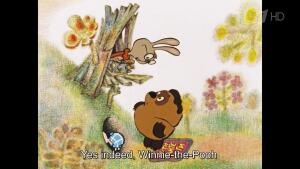
- It gathers Disney's Pooh shorts into a feature and preserves one of the studio's gentlest character worlds.
- It captures animation after the classic theatrical era, when television, adult features, international studios, and festival films were all reshaping the medium.
- It helps connect famous late-1970s landmarks to the surrounding works that explain the decade's variety.
Legacy And Impact
The Many Adventures of Winnie the Pooh marks the period when Disney feature animation endured by becoming looser, smaller, and more dependent on voice personality.
In this book, The Many Adventures of Winnie the Pooh works as evidence that animation history was becoming broader, stranger, and more international during the 1970s.
Its value also comes from the way it preserves a production context, not just a plot: a studio habit, a national style, a television format, or a feature-length experiment.
It also gives this section texture by showing how many animated works survived through regional memory, television recycling, and festival circulation.
Trivia
- The feature keeps the storybook device, so Pooh's world still feels like it is being discovered by turning pages.