
Studio: Fleischer Studios (Color Classics)
Distributor: Paramount Pictures
Produced by: Max Fleischer
Short Synopsis
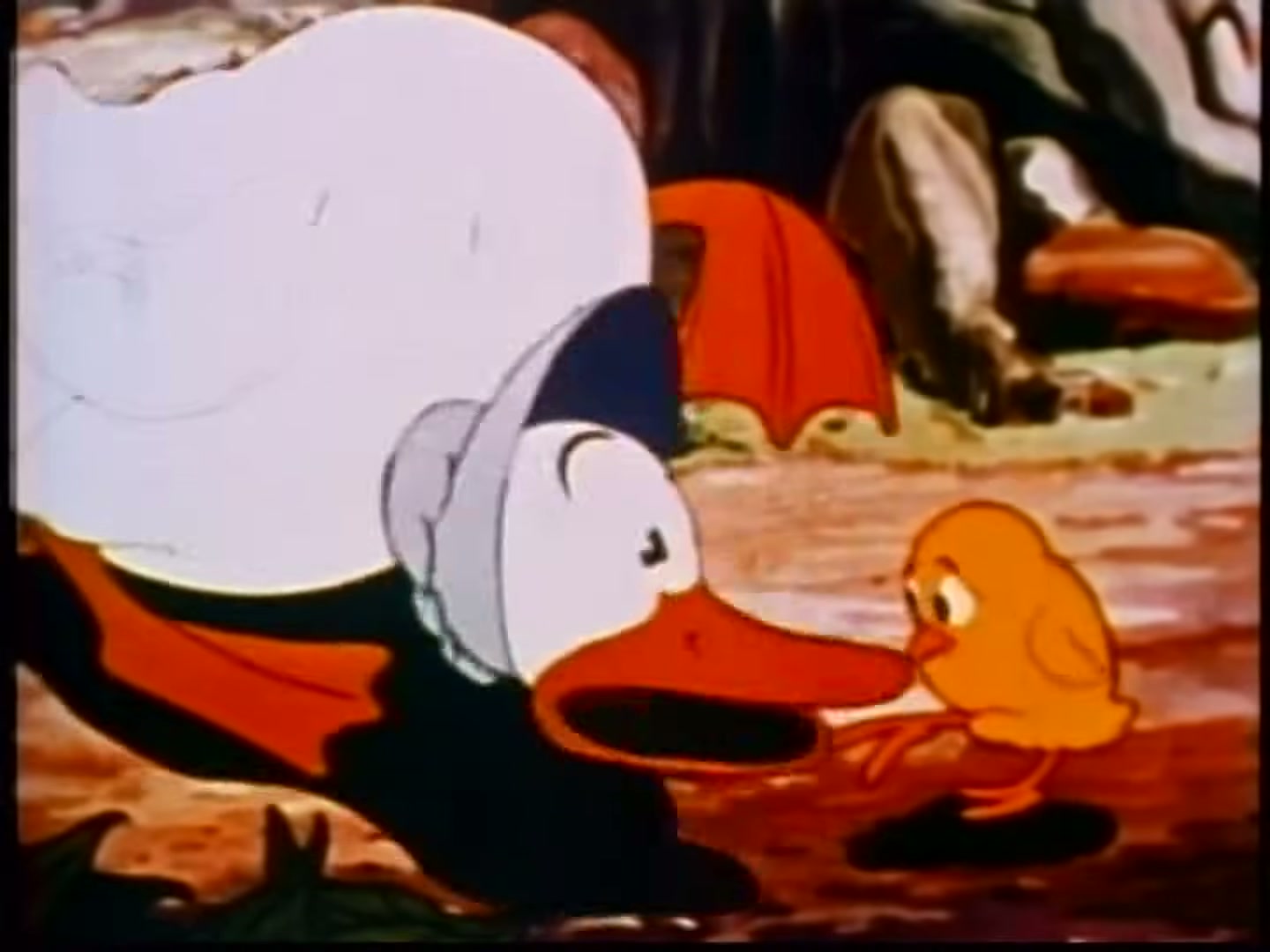
A hen's clutch of eggs hatches, and among the chicks is one that is not a chick at all but a duckling, hatched from an egg that rolled into the wrong nest. The chicks shun him: he waddles when they strut, he cannot scratch, he is drawn to the pond, and the hen does not know what to make of him. Left out of the games, the duckling mopes by the water. Then a hawk swoops on the barnyard and snatches one of the chicks, carrying it off over the pond; the duckling, the only one who can swim, dives in, pursues the hawk, and in a fight on the water rescues the chick and brings it home. The hen and the chicks welcome him as one of the family, and the little stranger is a stranger no more.
Why It Matters
- It is the Ugly Duckling retold as a barnyard rescue story, five years after Disney's version and three before its colour remake, and the Fleischers make the duckling's difference a practical matter, he can swim and the others cannot, rather than a question of beauty; the hawk attack over the pond is well staged.
- The film is in the public domain in the United States, its copyright having lapsed with most of the series, and it is one of the Color Classics most often included in public-domain children's compilations for its gentle moral.
Notes and Trivia
- Disney's Ugly Duckling of 1939 won the Academy Award; the Fleischer version was not nominated.
- Eli Brucker, co-animator, later worked on the Superman series.
- See also: The Song of the Birds (1935), Hawaiian Birds (1936).


