
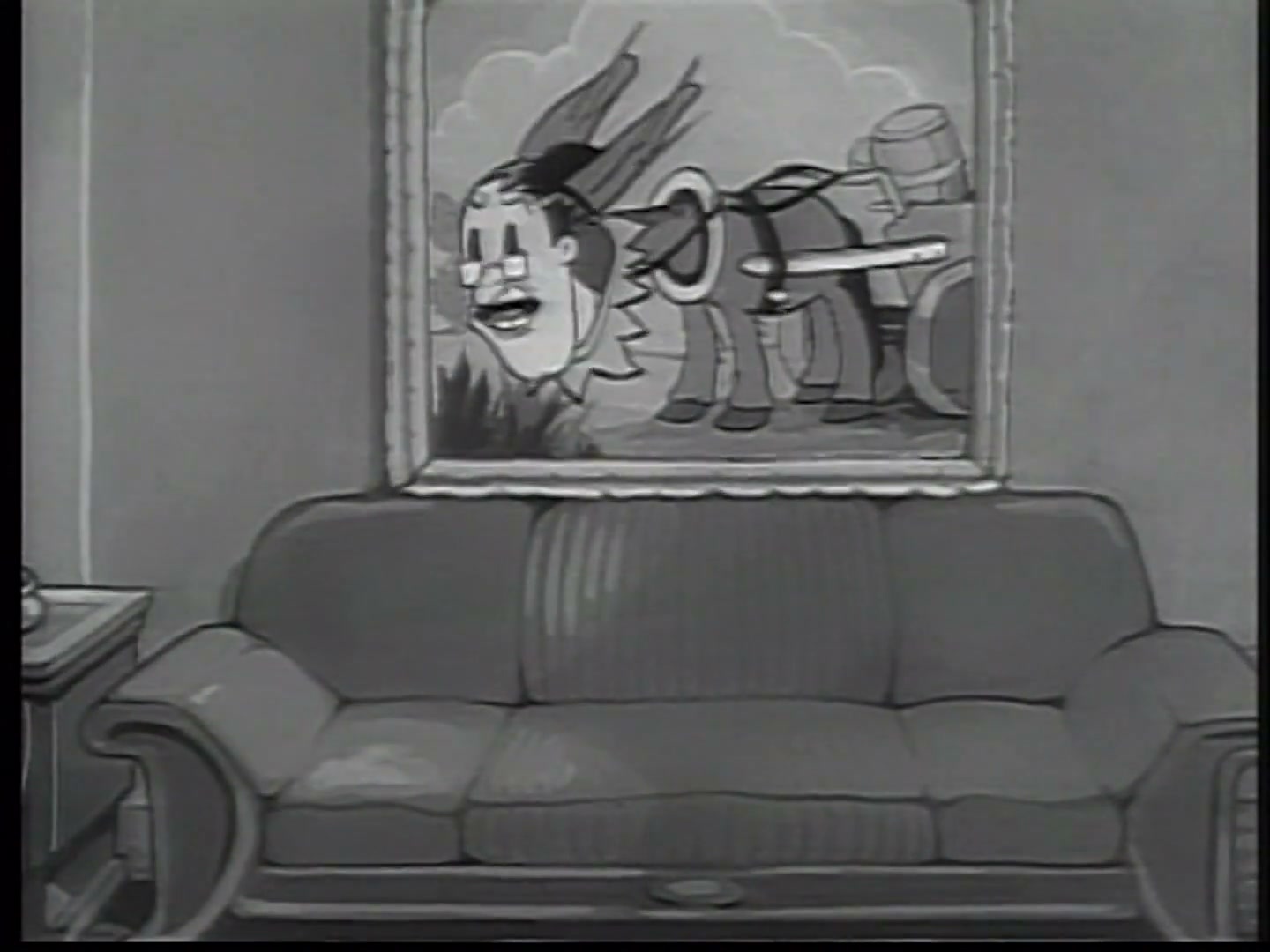
Studio: Fleischer Studios
Distributor: Paramount Pictures
Produced by: Max Fleischer
Short Synopsis
Betty runs Grampy's campaign for mayor, with a song, a parade and a platform of good cheer, and he wins by a single vote, which the town paper reports as a landslide. In office he discovers that the job is not what he expected: the desk is piled with complaints, the councillors are tiresome, and the city's problems are real. He puts on his thinking cap and sets about them in his own way, building a free bridge across the river in an afternoon, installing a public automatic root-beer fountain in the square, turning the traffic and the garbage and the housing into problems a gadget can solve. The townspeople, who had expected a politician, get an inventor instead, and they love him for it; the film ends with the city cheering its new mayor and Betty beside him.
Why It Matters
- Grampy as mayor is a Depression fantasy of government by tinkerer, the New Deal as a thinking cap, and the film's cheerful conviction that public problems are engineering problems is a period document in itself; the free bridge and the root-beer fountain are the Fleischers' idea of municipal reform.
- The unrenewed copyright leaves it in the American public domain. It was Grampy's last appearance, the character retired after eleven cartoons as the series moved its attention to Pudgy, and it is one of the final Betty Boops animated by Lillian Friedman before she left the studio.
Notes and Trivia
- The title plays on "candid camera", the photography fad of 1937.
- The one-vote victory echoes the comic plot of several 1930s election films.
- See also: Judge for a Day (1935), The Impractical Joker (1937), Betty Boop and Grampy (1935).


