
Studio: Famous Studios (released without a studio name)
Distributor: Paramount Pictures
Produced by: Sam Buchwald
Short Synopsis
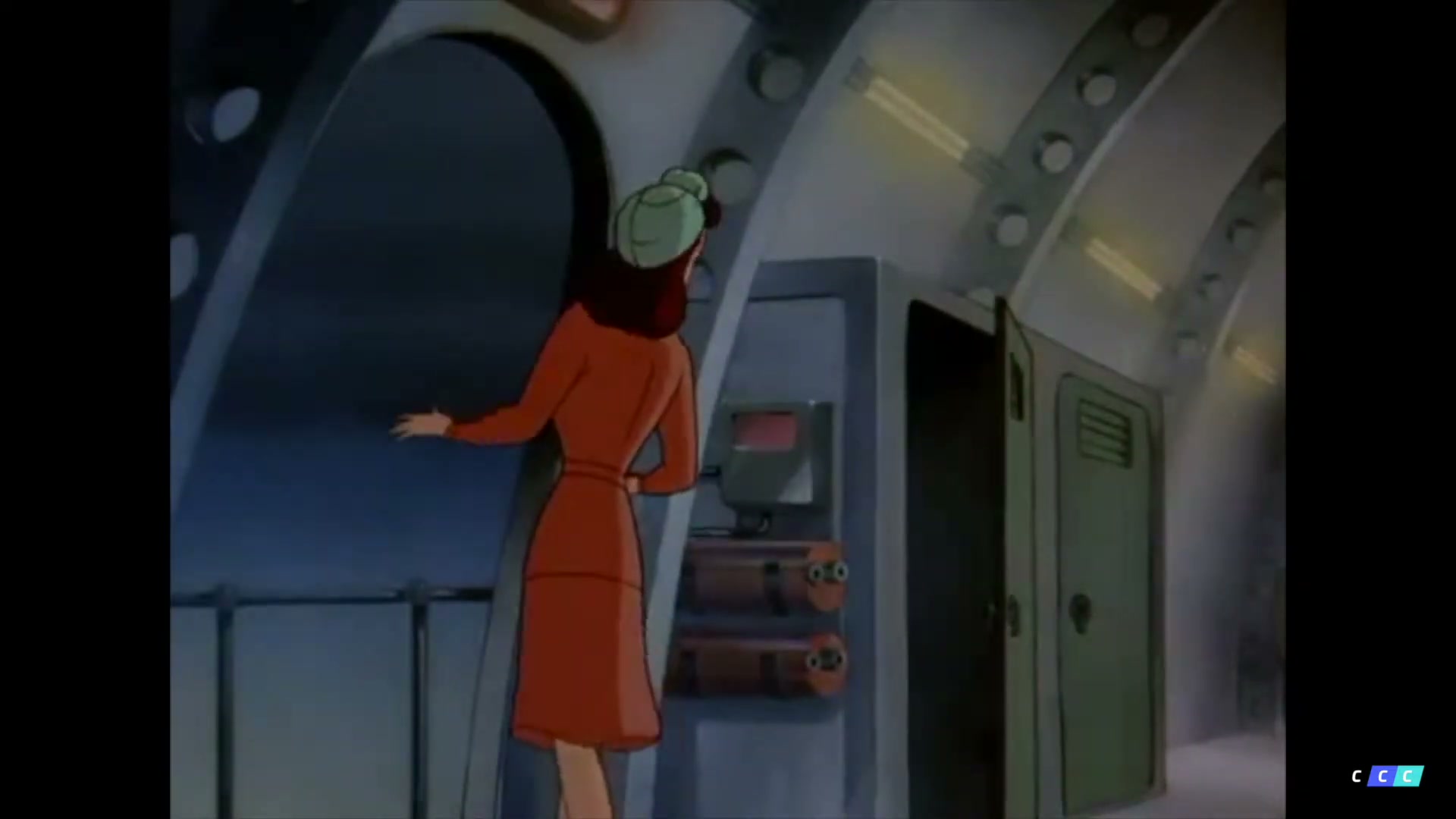
A new giant bomber is about to make its first flight. Japanese spies, drawn in the full racial caricature of the war years, knock out the night guards, hide in empty bomb casings and emerge in the air to seize the plane and turn it toward Tokyo. Clark Kent and Lois Lane are aboard for the Daily Planet's story; Lois, hiding in a locker, is discovered and held at gunpoint, and the spies radio a message to Japan. Clark becomes Superman, catches a bomb the spies drop on the city, and boards the plane. In the fight the controls are wrecked and the bomber falls; Superman catches it and carries it, wings and all, back to the airfield, where the spies are arrested. The title is a portmanteau of "Japanese" and "saboteur".
Why It Matters
- As a piece of animation it is up to the series' standard, with the enormous bomber, modelled on the B-19, drawn with the Fleischer unit's usual care for machines, and Superman carrying it by its nose a memorable image; as a document it shows how quickly the Superman cartoons were turned to propaganda after Pearl Harbor, with the enemy drawn as caricatures rather than villains.
- It was the first Superman cartoon made after Paramount took the studio from the Fleischers, and the first Famous Studios cartoon in colour, although the new name was not yet on the screen. Like the rest of the series it is in the public domain, and it survives as a wartime document whose stereotyping is part of the record.
Notes and Trivia
- Bud Collyer and Joan Alexander were replaced for this film by Lee Royce and Barbara Willock; the regular voices returned later.
- The bomber's design is based on the Douglas XB-19, the largest American aircraft of the time, which had flown in 1941.
- See also: Terror on the Midway (1942), Destruction Inc. (1942), Tokio Jokio (1943).


