
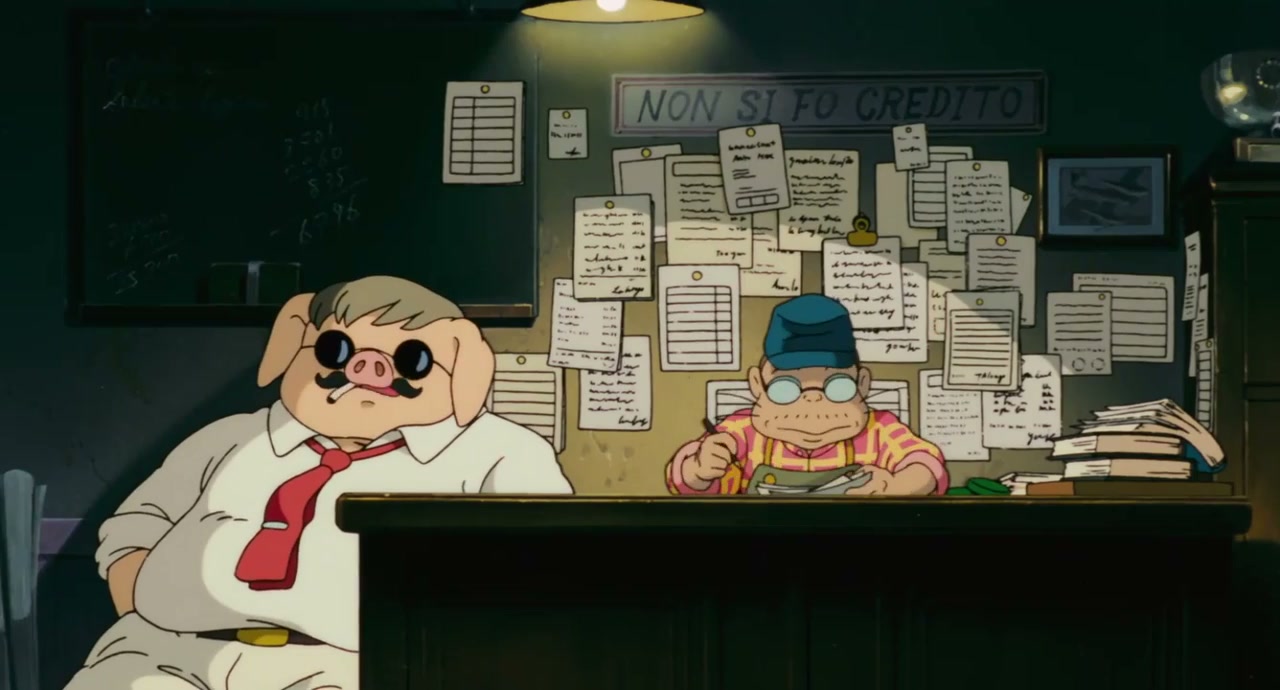
Studio: Studio Ghibli
Short Plot Synopsis
Porco Rosso belongs to the anime expansion around 1989-1993, when theatrical films, OVAs, manga adaptations, and studio-auteur projects circulated with growing international force.
The work often assumes viewers understand genre codes already, then pushes emotion, action, design, or atmosphere further than television could.
Why Is It Worth Watching?
- It is Miyazaki at his most wistful: aviation romance, anti-fascist melancholy, and a hero who would rather be a pig than a man.
- It captures animation in the years when cable television, home video, theatrical musicals, anime fandom, and independent shorts were all changing the audience.
- It helps connect the famous early-1990s landmarks to the surrounding productions that made the period feel newly crowded.
Legacy And Impact
Porco Rosso shows anime becoming one of the central animation languages of the 1990s.
In this book, Porco Rosso works as evidence that animation had become a many-track medium by the early 1990s.
Its value also comes from the way it preserves a production context, not just a plot: a studio habit, a national style, a television format, or a feature-length experiment.
It also gives this section texture by showing how animated works survived through fandom, regional memory, television reruns, home video, and festival circulation.
Trivia
- The film grew from Miyazaki's Hikotei Jidai manga, which helps explain its loving attention to seaplane mechanics.


