
Studio: Warner Bros. Cartoons
Short Plot Synopsis
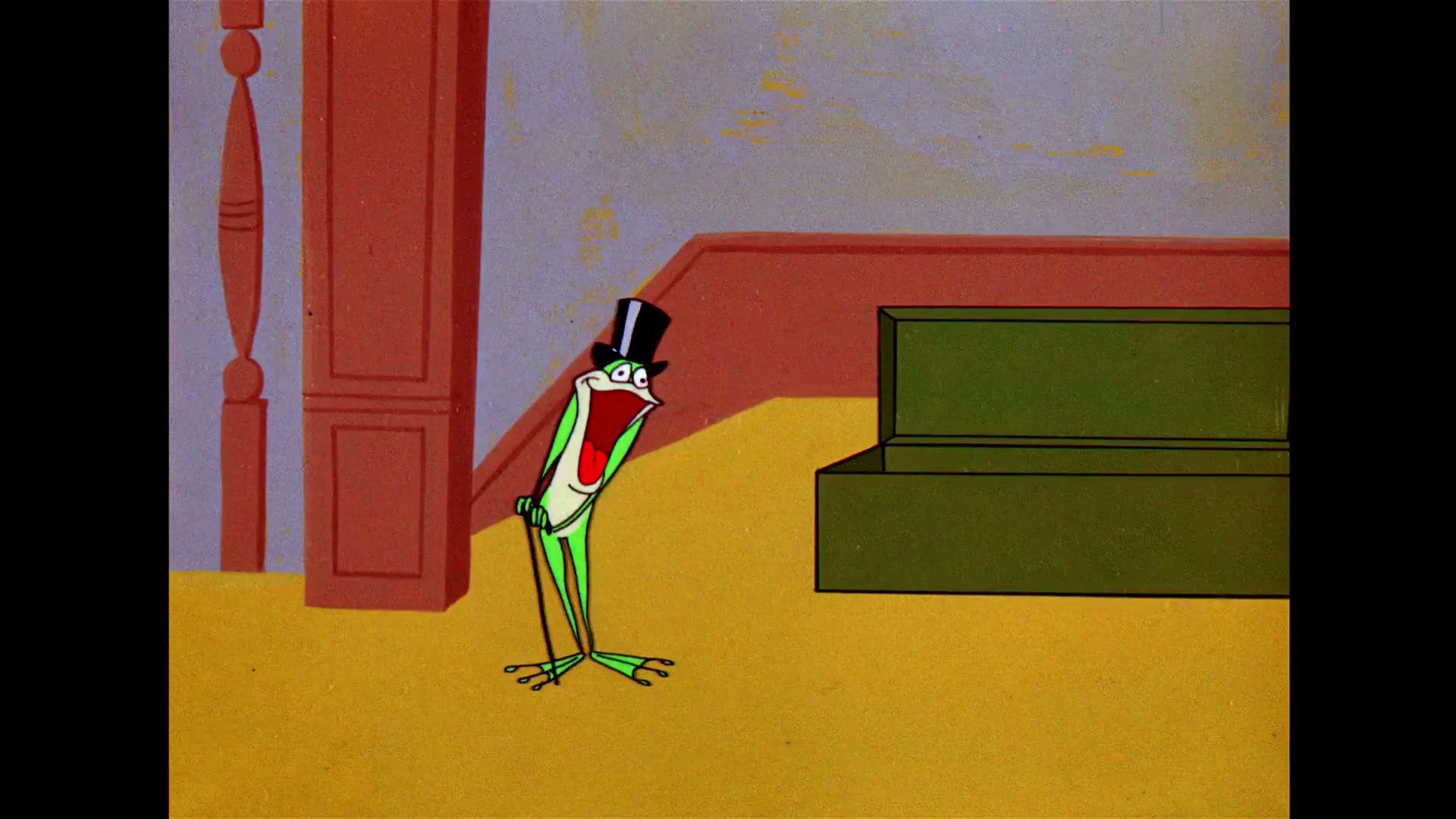
A construction worker discovers a frog in a cornerstone and quickly imagines easy money when the creature bursts into flawless vaudeville song. But the miracle performer only sings in private. The moment an audience appears, the frog becomes an ordinary, blank-faced animal, trapping its owner in a spiral of humiliation, greed, and desperation.
The cartoon's structure is almost cruel in its precision. Each attempt to monetize the frog repeats the same premise, but with escalating social damage, making the comedy feel both musical and pitiless.
Why Is It Worth Watching?
- It is one of Chuck Jones's most perfectly engineered cartoons, built around repetition, timing, and delayed disbelief.
- It turns a simple high-concept gag into a miniature tragedy of American get-rich fantasy.
- It shows Warner cartoon comedy operating without chase mechanics, relying instead on performance, rhythm, and psychological collapse.
Legacy And Impact
One Froggy Evening has endured because the frog is funny and because the premise is brutal. The owner is not destroyed by a villain or a monster, but by the impossible gap between private certainty and public proof. That idea travels far beyond one theatrical short.
The cartoon also became a key example of how Jones could stretch a premise into something elegant, nearly silent, and emotionally exact. Its pacing influenced later television animation, and Michigan J. Frog went on to live a second cultural life far beyond the original release.
In a canon of major cartoons, this short stands as one of the clearest cases where comic form, character logic, and cultural afterlife all align without waste.
Trivia
- The frog's signature song, Hello! Ma Baby, helps make him feel like a relic from an earlier entertainment industry trapped inside a modern city.
- Michigan J. Frog later became the mascot of The WB network, giving the short an unexpected second life in television branding.


