
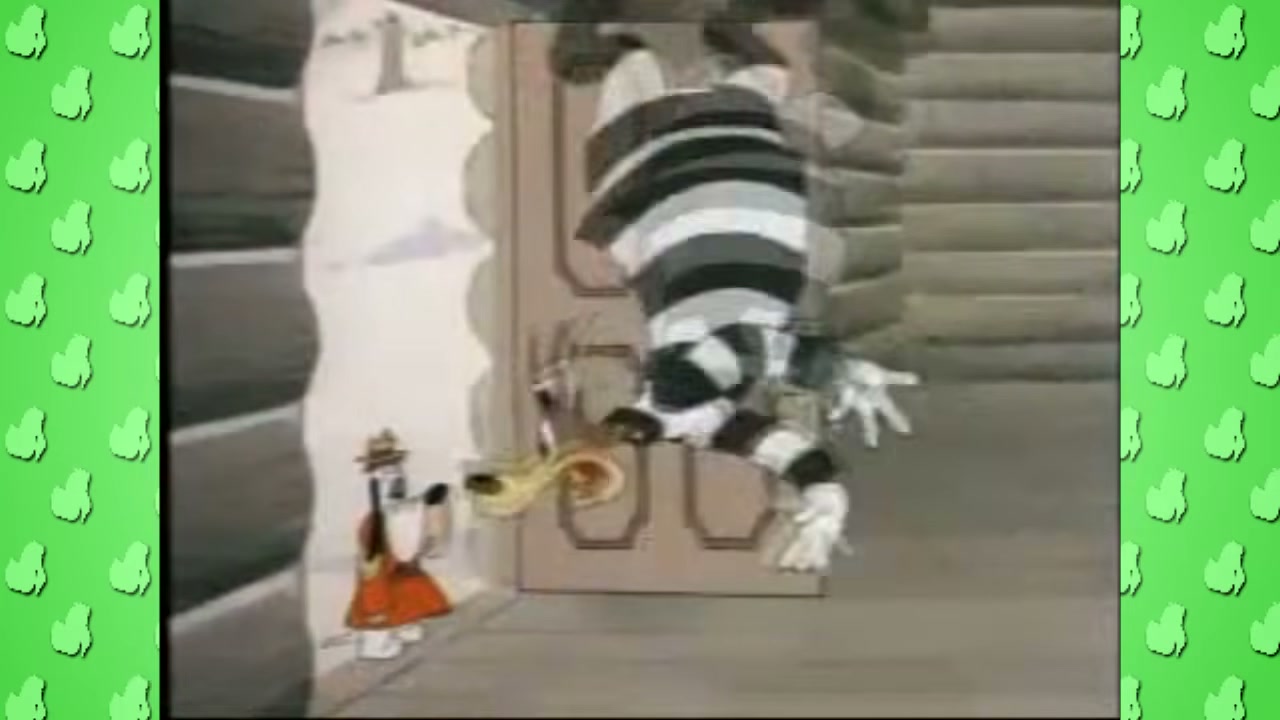
Studio: MGM Cartoons
Short Plot Synopsis
Northwest Hounded Police takes a familiar premise and lets Tex Avery's logic detonate it. The story is less about emotional growth than about speed, reversal, exaggeration, and the cartoon's awareness that anything can happen if the gag is strong enough.
Characters stretch, panic, stare at the audience, break formulas, and treat genre conventions as toys. The short works like a machine built to undermine its own setup.
Why Is It Worth Watching?
- It perfects the Droopy pursuit formula, where escape becomes impossible because the joke is already waiting.
- It captures a specific pressure point in 1940s animation: war, studio rivalry, new stars, or feature ambition.
- It helps explain how theatrical cartoons changed as audiences, censorship, and global politics changed around them.
Legacy And Impact
Northwest Hounded Police helps define the MGM Avery style: louder than Disney, more controlled than pure chaos, and deeply aware of movie language. Its influence runs through later television cartoons, advertising, and modern animated comedy.
For a book built around one thousand and one historically important cartoons, Northwest Hounded Police matters because it is not isolated. It sits inside a web of studios, characters, propaganda needs, music trends, and international production experiments that shaped what animation could become.
Trivia
- Northwest Hounded Police has a specific production footprint in the list, linking its year, format, and national context to animation history.
- Avery's MGM period is especially famous for pushing reaction takes and fairy-tale parody to extremes.
- Its compact running time made every gag, song, or message carry more structural weight than it would in a feature.


