
Studio: Fleischer Studios (Color Classics)
Distributor: Paramount Pictures
Produced by: Max Fleischer
Short Synopsis
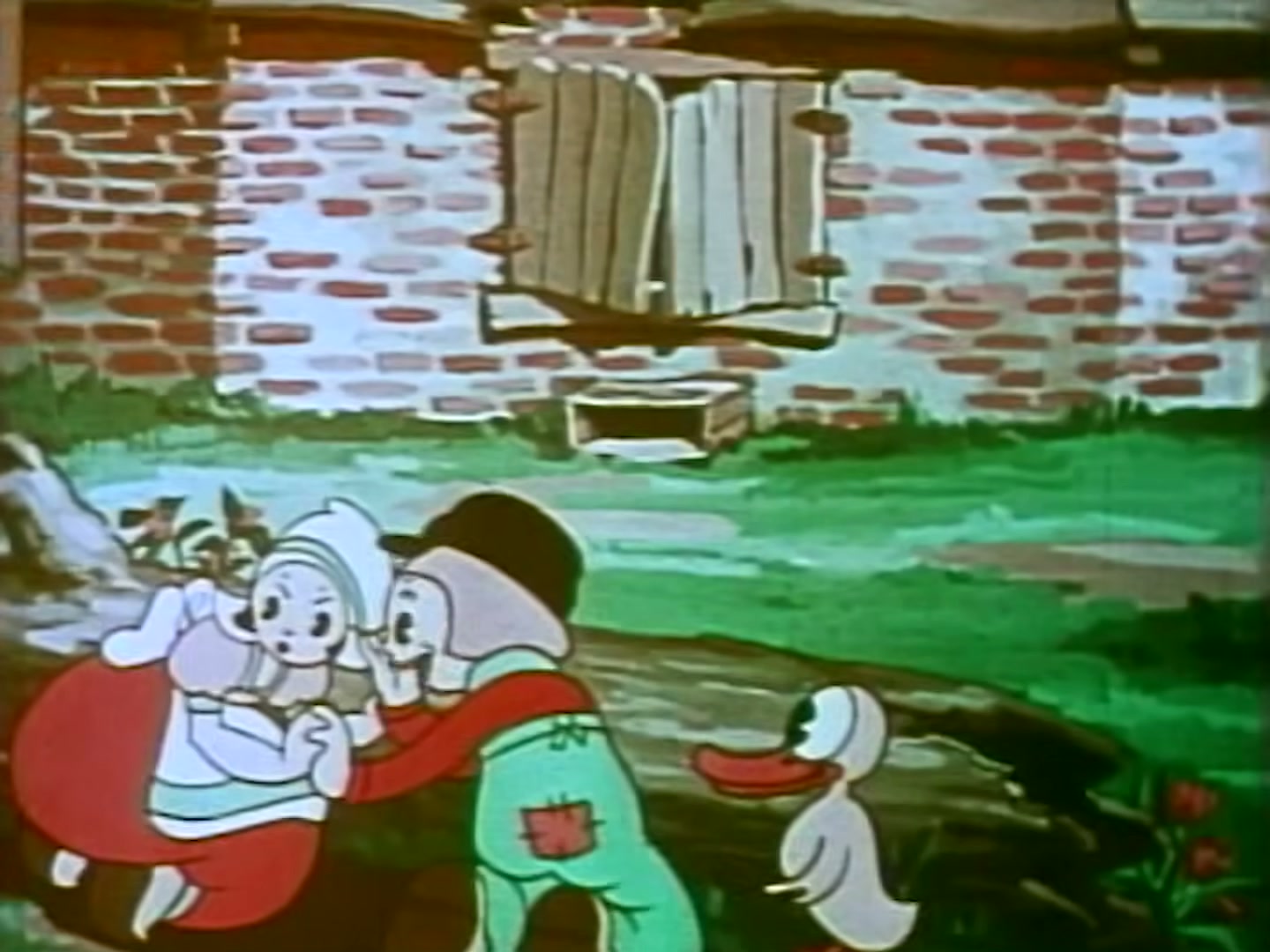
In a Dutch village of canals, tulips and windmills, the children play in wooden shoes and the townsfolk sing the title song. On the edge of town stands a ruined windmill where a miser lives, a hunched, hook-nosed hermit who hoards gold and hates everyone. Two children, a boy and a girl, stray to the mill and see him counting his money; he catches them and ties them up, meaning to keep his secret. The children's duck escapes and raises the alarm in the village, and the townsfolk march on the mill with pitchforks and lanterns. They free the children and seize the miser, and rather than punish him they scrub him, shave him, dress him in clean clothes and make him one of them, and the film ends with the reformed miser dancing in the square, his gold spent on a party for the village.
Why It Matters
- It is the first of the Color Classics made in two-colour Cinecolor, after Poor Cinderella's Technicolor opening, and the Dutch village, built as a three-dimensional model set for the stereoptical camera, has a depth no other studio's cartoons of 1934 could match; the miser's reform by soap and water is the series' sentimental streak at its sunniest.
- Unlike most Color Classics, its copyright was renewed, by U.M.&M. TV Corp. on 7 June 1962 (R296303), so it stays protected in the US until the end of 2029 even though it is one of the most reprinted films of the series; the title song by Mencher and Tobias, who had written for Dancing on the Moon, was published as sheet music.
Notes and Trivia
- Disney's exclusive contract with Technicolor forced the Fleischers into two-colour processes until 1936.
- Willard Bowsky, co-animator, was the studio's Popeye specialist.
- See also: Poor Cinderella (1934), Dancing on the Moon (1935), Somewhere in Dreamland (1936).


