
Studio: Fleischer Studios
Distributor: Paramount Pictures
Produced by: Max Fleischer
Short Synopsis
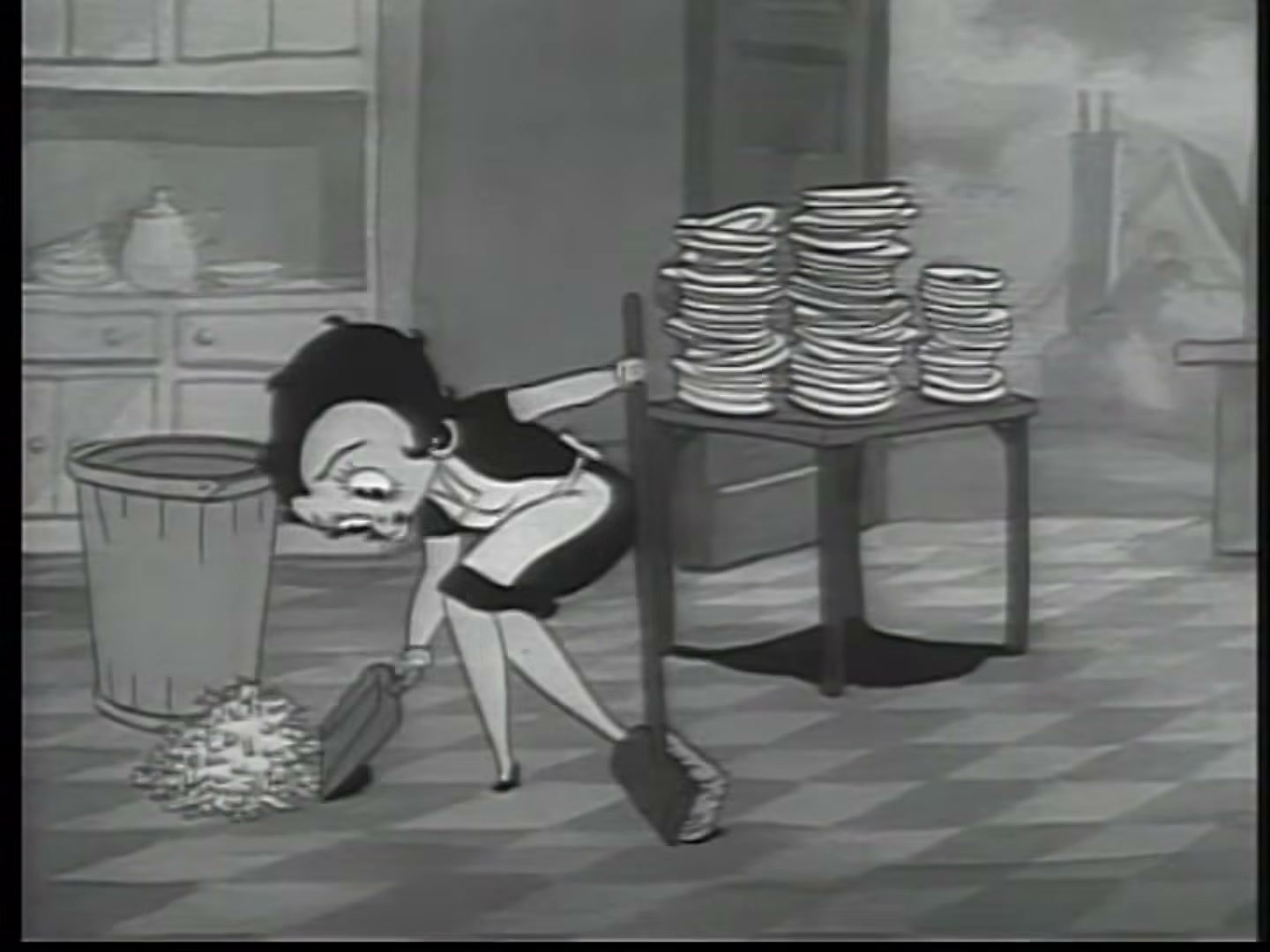
Betty wakes the morning after her birthday party to a wrecked apartment, with streamers, dishes, bottles and overturned furniture everywhere, and sings the title song as she sets about the clean-up without enthusiasm. Grampy arrives to take her for a drive, but she cannot leave until the place is tidy. He puts on his thinking cap, the mortarboard with the lightbulb, and invents on the spot: a dishwasher driven by the cuckoo clock, a bicycle that scrubs the floor as it is pedalled, a player piano that folds the laundry, a system of pulleys that makes the bed. Dancing from machine to machine, Grampy has the apartment spotless in minutes, and he and Betty drive off in his car, which has a built-in soda fountain.
Why It Matters
- The film is the Grampy formula in its purest form, a mess, a cap, a set of machines and a dance, and the inventions are among his best, especially the cuckoo-clock dishwasher; the morning-after opening, with Betty wincing at the wreckage, is as close as the post-Code series came to a hangover joke.
- It is in the public domain in the United States and widely seen. It is also the first cartoon in which Betty's hair is drawn without its separate curl layer, a small simplification in the character's design that marked the beginning of her gradual modernisation over the series' last two years.
Notes and Trivia
- Jack Mercer voices the roosters that wake Betty.
- Eli Brucker, the second animator, later worked on the Fleischer Superman series.
- See also: Grampy's Indoor Outing (1936), The Impractical Joker (1937), The Candid Candidate (1937).


