Studio: Rankin/Bass Productions, Topcraft
Short Plot Synopsis
Hobbit is built for television scale but has feature-sized ambitions. It uses familiar literature, holiday viewing, or established characters to make a broadcast feel like an event.
The animation is shaped for repeatability: clear designs, direct scenes, and voice performances that can survive annual or nostalgic rewatching.
Why Is It Worth Watching?
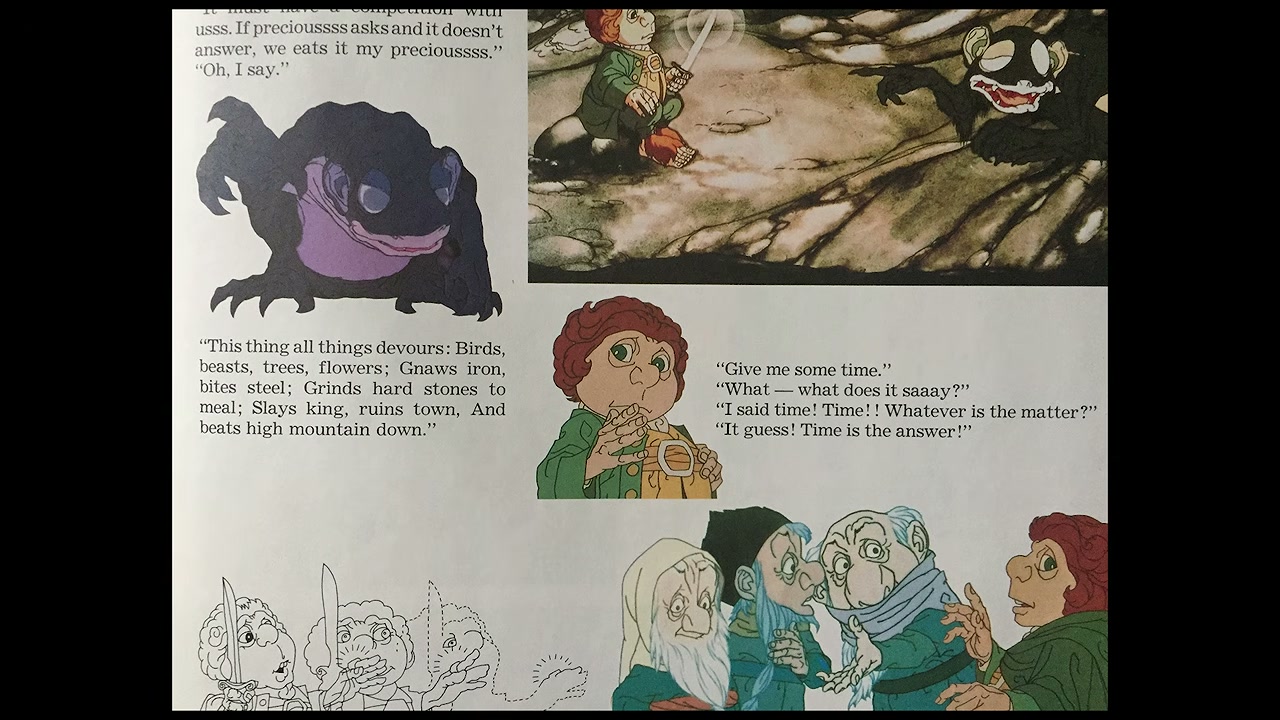
- It compresses Tolkien into a musical television feature and became many viewers' first animated Middle-earth.
- It captures animation after the classic theatrical era, when television, adult features, international studios, and festival films were all reshaping the medium.
- It helps connect famous late-1970s landmarks to the surrounding works that explain the decade's variety.
Legacy And Impact
Hobbit shows television becoming one of animation's most important homes.
In this book, Hobbit works as evidence that animation history was becoming broader, stranger, and more international during the 1970s.
Its value also comes from the way it preserves a production context, not just a plot: a studio habit, a national style, a television format, or a feature-length experiment.
It also gives this section texture by showing how many animated works survived through regional memory, television recycling, and festival circulation.
Trivia
- Topcraft animated the special years before many of its artists became connected to the lineage that led to Studio Ghibli.