
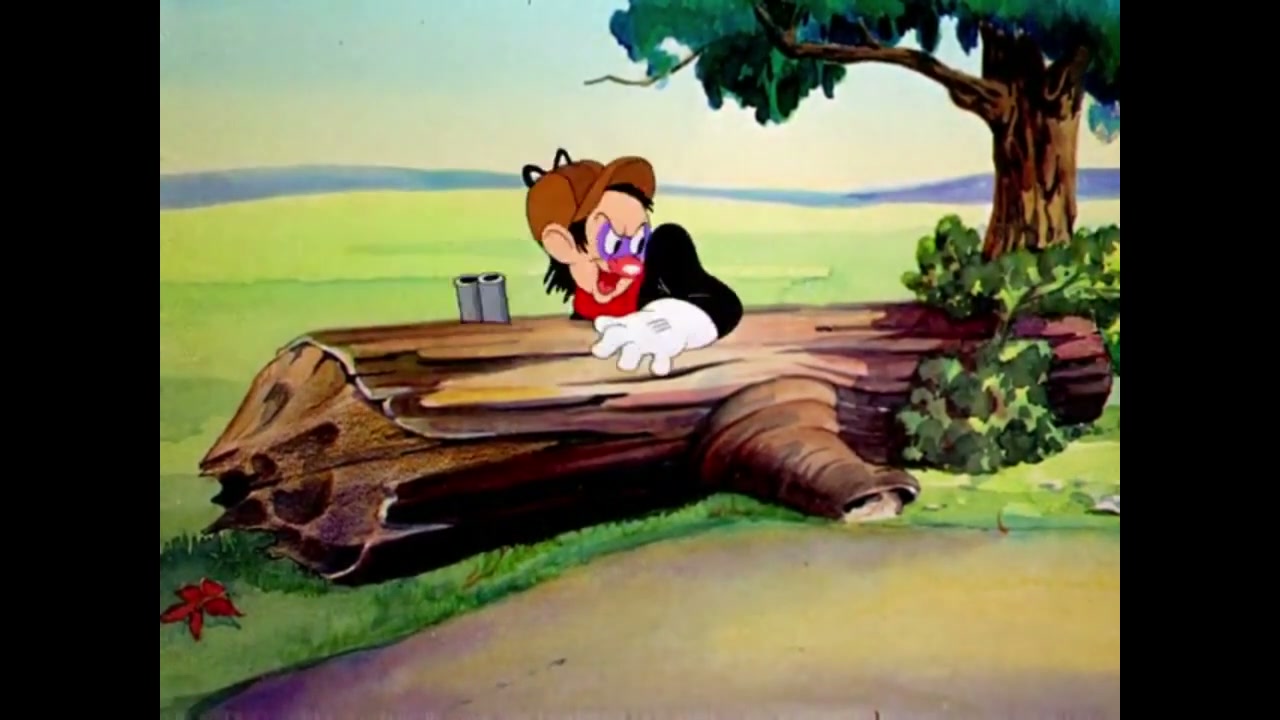
Studio: Leon Schlesinger Productions (Merrie Melodies)
Distributor: Warner Bros. Pictures
Produced by: Leon Schlesinger
Short Synopsis
John Sourpuss reads that meat prices have soared and vows to hunt his own, to get back at the government, and sets out with his dog for a rabbit. The rabbit stamps fake tracks to lead the dog into a hollow log and rolls it down a hill; he multiplies into a dozen rabbits hopping over a ridge; he poses as a rabbit-shaped target, disguises himself as a dog to lead the dog astray, sings and dances a song about how screwy he is, and runs the hunter ragged with the bounding, cackling energy of the Daffy Duck of the same years. The original ending, cut for being too close to Daffy Duck and Egghead and restored on DVD, has the hunter driven mad and joined by a family of rabbits as crazy as the first.
Why It Matters
- This is the rabbit's third film and his first in his familiar grey, with a design by Charles Thorson, the former Disney artist, whose model sheet was labelled "Bugs' Bunny" after the director Ben "Bugs" Hardaway; the name stuck. Thorson's rabbit, with his white gloves and buck teeth, is recognisably the character, though the personality is still Daffy's.
- Tex Avery's A Wild Hare, a year later, quotes this film directly while replacing its mania with cool, and the comparison is the clearest lesson in cartoon history about what a personality is.
Notes and Trivia
- Pinto Colvig, Goofy's voice, plays the hunter.
- The restored ending appeared on the Looney Tunes Platinum Collection: Volume 2.
- See also: Porky's Hare Hunt (1938), Prest-O Change-O (1939), Elmer's Candid Camera (1940), A Wild Hare (1940).


