
Studio: Famous Studios
Distributor: Paramount Pictures
Produced by: Seymour Kneitel, Isadore Sparber
Short Synopsis
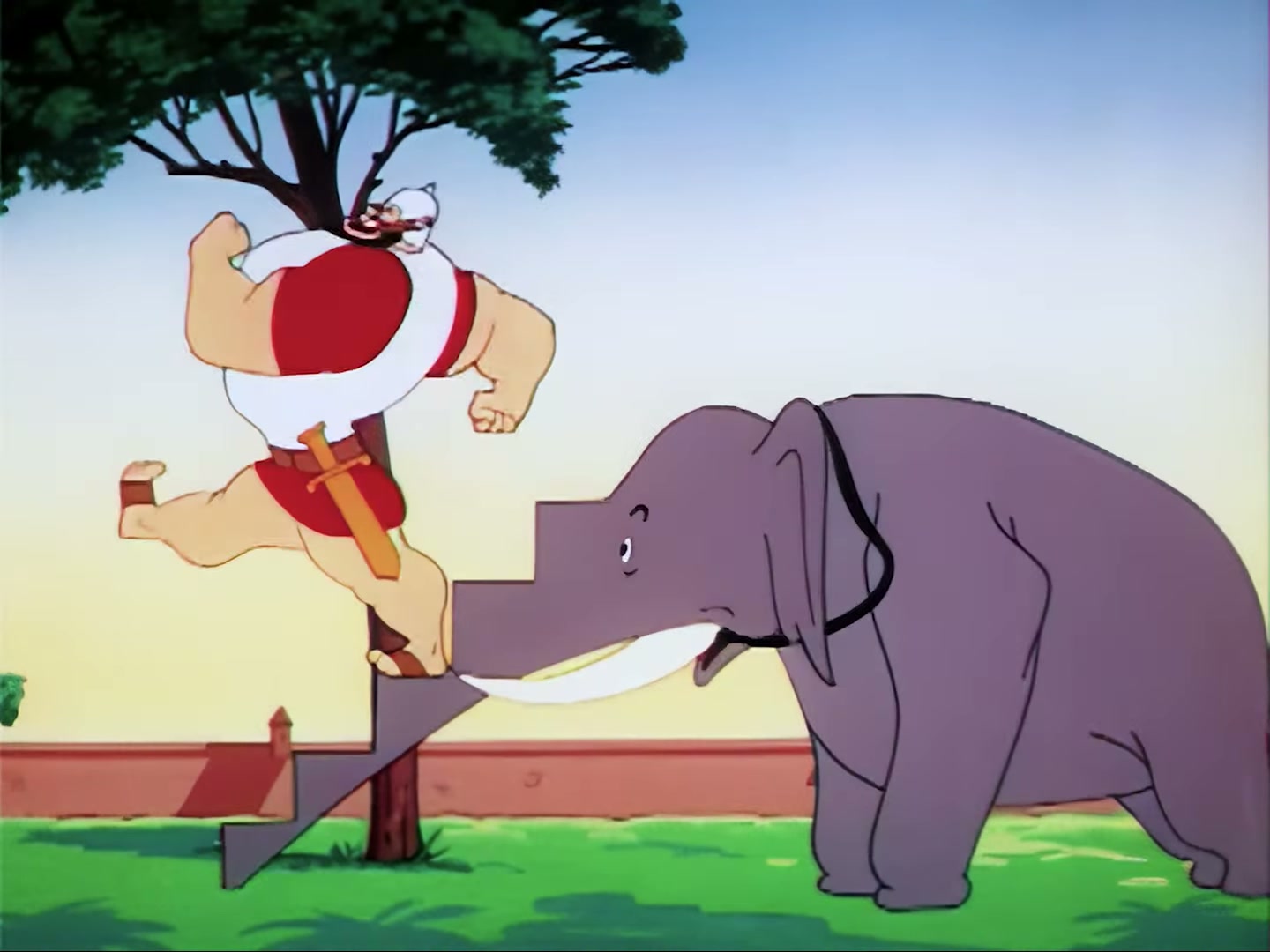
Popeye's nephews refuse to eat their spinach, so their uncle tells them how the family came by the habit. In ancient Greece his ancestor Hercules, who looks exactly like Popeye, draws his strength from garlic, one sniff of which lets him lift mountains and win every bout at the games. Bluto's ancestor, a hulking brute, challenges him. Before the fight he steals Hercules' garlic, and the hero, powerless, is knocked flying across the landscape and lands in a field of a leafy green plant. He eats some, grows strong again, flattens the brute and declares the new vegetable his strength forever after: spinach. The nephews, convinced, eat their spinach and grow instantly muscular, and Popeye's story ends with a chorus.
Why It Matters
- The origin myth of the spinach, told as a Greek legend with Popeye as Hercules and garlic as the prototype superfood, is the wittiest story idea in the late Popeye series, and I. Klein's script has fun with the mock-classical setting, from the stadium to the toga-clad Bluto.
- Greek Mirthology is one of the Famous Studios Popeyes in the public domain in the United States, its copyright never renewed, and it has been one of the most reprinted of them; it is also a representative of the studio's framing-story cartoons, in which Popeye lectures the nephews and the plot is a flashback.
Notes and Trivia
- The garlic gag plays on the real folk belief in garlic as a strength food.
- Popeye's nephews, Pipeye, Peepeye, Pupeye and Poopeye, appear only in the cartoons, not the strip.
- See also: Ancient Fistory (1953), Me Musical Nephews (1942), Bride and Gloom (1954).


