
Studio: United Productions of America
Short Plot Synopsis
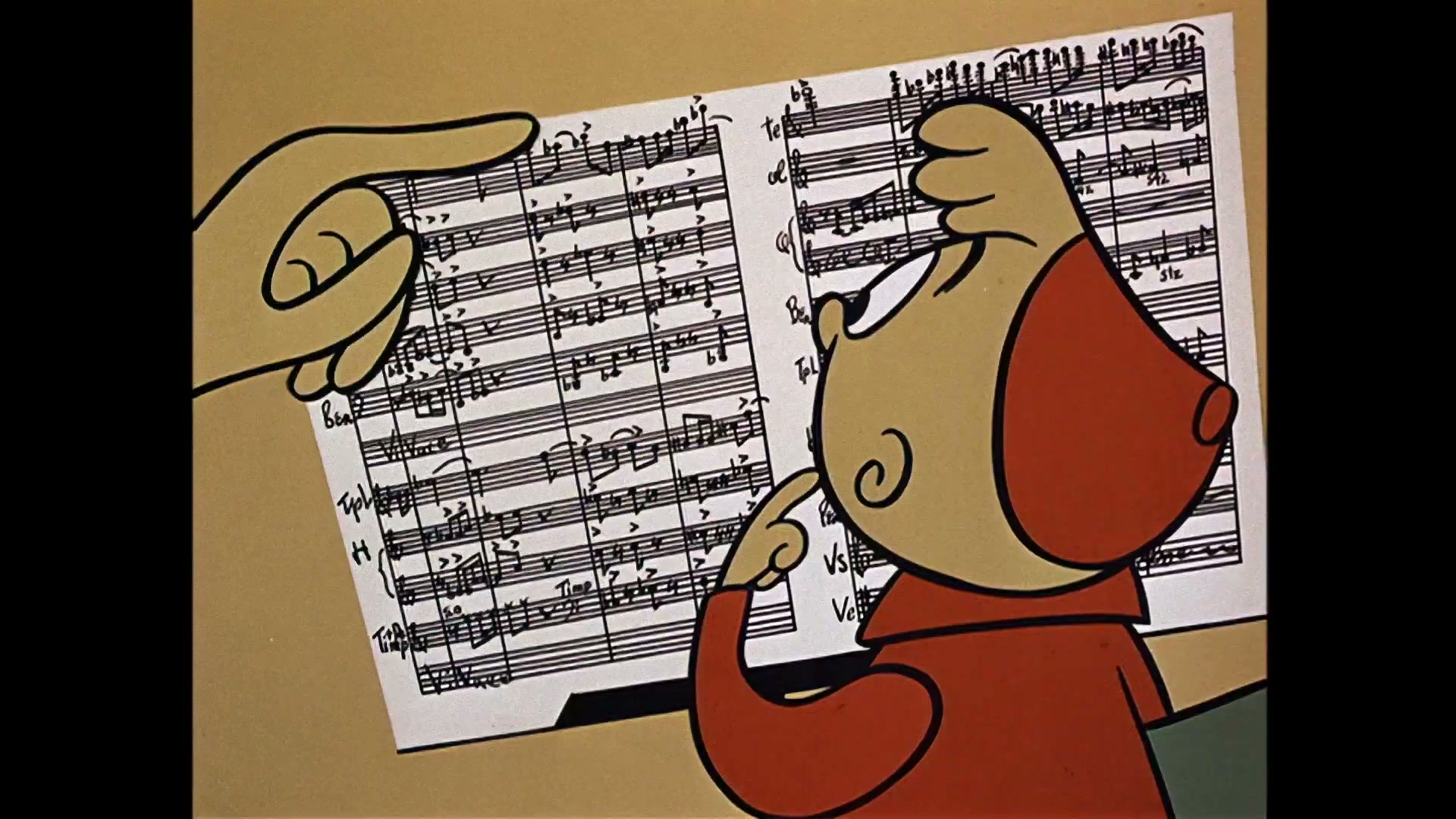
Gerald is a little boy who cannot speak in ordinary words. Instead, he communicates entirely through sound effects: whistles, boings, crashes, squeaks, and mechanical blasts. His parents worry, doctors fail, and school becomes humiliating until a radio producer realizes that Gerald's difference is also his gift.
The film keeps its story simple so the sound-design idea can stay in the foreground. Every scene is built around contrast between social normality and cartoon abstraction, with UPA's stripped-down design making the emotional beats sharper rather than softer.
Why Is It Worth Watching?
- It is one of the defining UPA shorts and a key break from the full-animation naturalism that had dominated the 1930s and 1940s.
- It proves that stylization could be emotionally direct, funny, and commercially viable all at once.
- It marks a major postwar shift toward modern graphic design, limited movement, and concept-driven cartoon storytelling.
Legacy And Impact
Gerald McBoing-Boing belongs in any serious animation canon because it showed American theatrical animation another future. Disney polish and Warner velocity were not the only available models; UPA could flatten space, simplify form, and still produce a hit with personality.
That mattered far beyond one short. The film's success helped legitimize mid-century modern design in animation and fed directly into the visual language of later television cartoons, commercials, educational films, and studio branding.
It also remains historically important because its sympathy never turns sentimental. Gerald is not cured; the world learns to value the way he already works. That makes the cartoon feel unusually modern in both form and attitude.
Trivia
- Dr. Seuss wrote the original story, but the film's sound-centered structure transformed it into one of UPA's clearest visual manifestos.
- It won the Academy Award for Best Animated Short Film.


