Studio: Les Films Armorial, Ceskoslovensky Filmexport, Kratky Film Praha
Short Plot Synopsis
Fantastic Planet belongs to the adult-animation break of the early 1970s. Instead of reassuring family audiences, it uses animation for sexuality, politics, violence, surrealism, or social unease.
That shift matters because it widened the medium. Animation could be abrasive, lyrical, exploitative, philosophical, or all of those at once.
Why Is It Worth Watching?
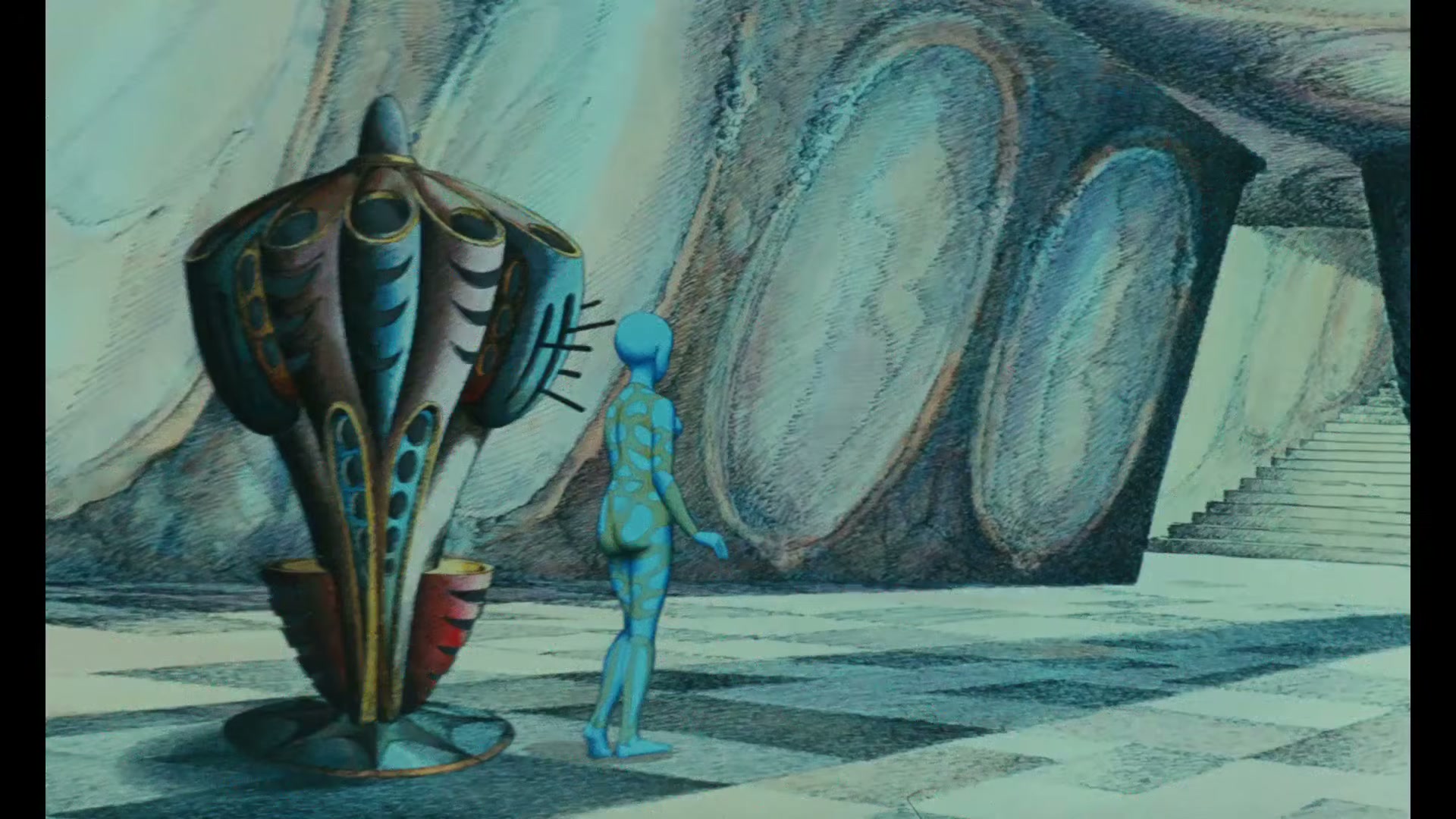
- It makes science fiction animation alien in both politics and design, with Roland Topor's drawings driving the world.
- It captures a moment when television animation, adult features, festival shorts, and international studios were reshaping what cartoons could be.
- It helps connect the decade's famous titles to the less obvious works that explain the medium's range.
Legacy And Impact
Fantastic Planet helped prove that feature animation did not have to speak only in Disney grammar.
In this book, Fantastic Planet functions as a marker of animation moving through new audiences, new politics, and new distribution habits.
That makes the entry useful not only as an isolated title, but as part of the larger story of cartoons after the classic theatrical era.
Its value also comes from the way it records a changing production culture, where small studios and television pipelines could stand beside theatrical features.
Trivia
- Its Cannes prize helped prove that feature animation could live inside international art cinema, not only children's programming.