
Studio: Fleischer Studios (Color Classics)
Distributor: Paramount Pictures
Produced by: Max Fleischer
Short Synopsis
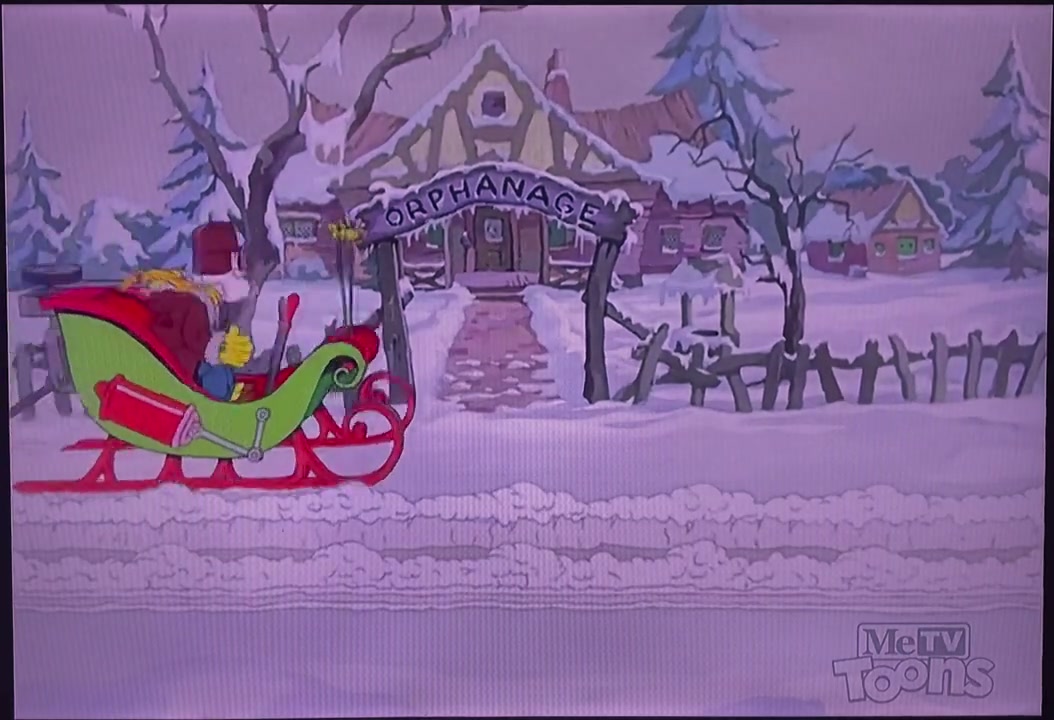
It is Christmas morning at an orphanage, and the children rush downstairs to find their presents: a doll, a drum, a horn, a toy train, each of which breaks the moment it is touched. The toys are cheap and the orphanage is poor, and within minutes the children are in tears over a floor of broken junk. Grampy, Betty Boop's inventor relative, drives past, hears the crying, and puts on his thinking cap. He raids the orphanage kitchen and cellar and builds new toys out of what he finds: a rocking horse from a chair and a clothes brush, a doll from a hot-water bottle, a train from pots and pans, a merry-go-round from an umbrella and kitchen stools, each one working better than the toy it replaces. He dresses as Santa Claus, distributes the lot, and leads the children in a dance round the tree, and the orphanage has its Christmas after all.
Why It Matters
- It is the only Color Classic to borrow a Betty Boop character, and Grampy's junk-built toys are the best of all his inventions, each made of recognisable household objects and each a real toy; the opening, with the cheap presents breaking one by one, is a sharper picture of Depression poverty than most cartoons dared.
- The film is in the public domain in the United States, its copyright having lapsed, and it has been a staple of public-domain Christmas compilations for decades, probably the most-seen Color Classic of all; it circulates in both its original and its NTA television titles.
Notes and Trivia
- Everett Clark, Grampy's voice in the Betty Boop series, plays him here too.
- The orphanage Christmas was a stock setting of 1930s sentiment, from Little Orphan Annie to Shirley Temple.
- See also: Betty Boop and Grampy (1935), Grampy's Indoor Outing (1936), Play Safe (1936).


