
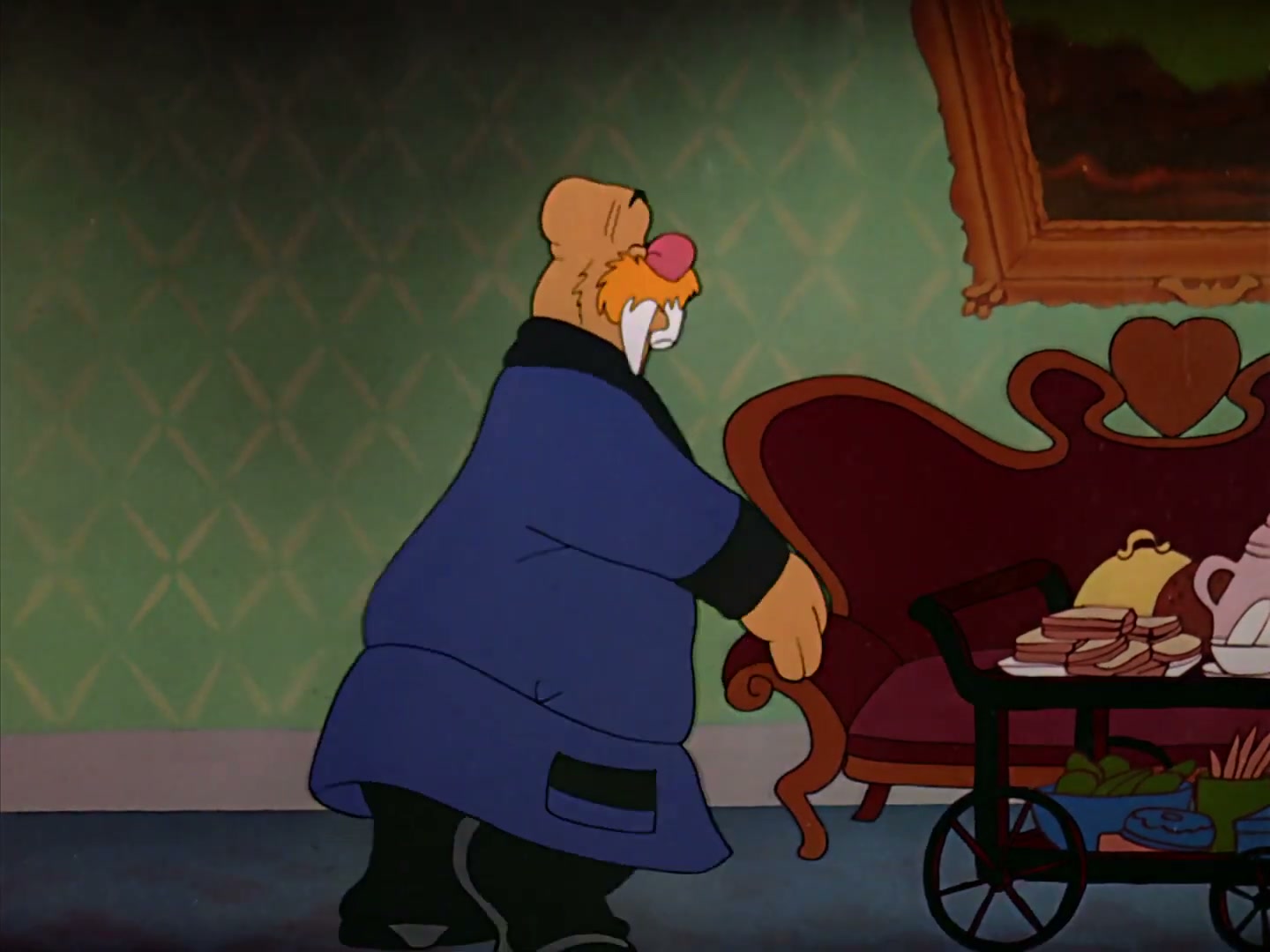
Studio: Walter Lantz Productions
Short Plot Synopsis
Chew-Chew Baby uses Walter Lantz studio energy: loud characters, chases, broad voices, and quick escalation. The story is usually simple, but the point is how quickly irritation becomes full cartoon warfare.
Whether centered on Woody Woodpecker, Andy Panda, or another short-lived figure, the film shows a studio surviving through personality, noise, and theatrical momentum.
Why Is It Worth Watching?
- It captures Walter Lantz characters during the rowdy theatrical-short years.
- It captures a specific pressure point in 1940s animation: war, studio rivalry, new stars, or feature ambition.
- It helps explain how theatrical cartoons changed as audiences, censorship, and global politics changed around them.
Legacy And Impact
Chew-Chew Baby helps explain the Lantz studio's staying power. Its cartoons were rarely as prestigious as Disney's or as revered as Warner's, but they built durable characters and a recognizable comic tempo.
For a book built around one thousand and one historically important cartoons, Chew-Chew Baby matters because it is not isolated. It sits inside a web of studios, characters, propaganda needs, music trends, and international production experiments that shaped what animation could become.
Trivia
- Chew-Chew Baby has a specific production footprint in the list, linking its year, format, and national context to animation history.
- Lantz characters often changed voice, design, and temperament as the studio searched for the strongest formula.
- Its compact running time made every gag, song, or message carry more structural weight than it would in a feature.


