
Studio: Fleischer Studios
Distributor: Paramount Pictures
Produced by: Max Fleischer
Short Synopsis
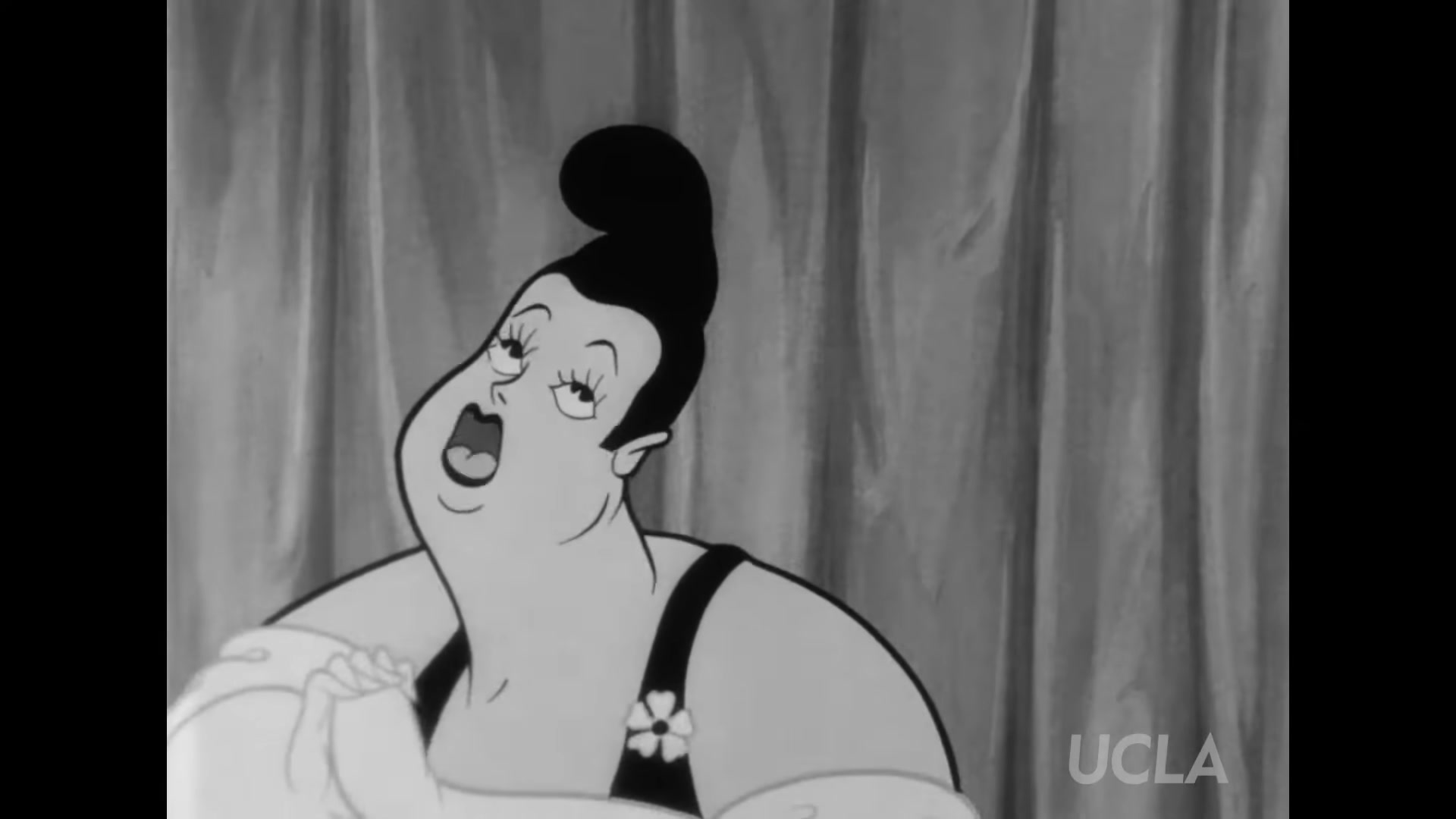
Betty takes her reluctant cousin Buzzy to a recital by Madame Shrill, the Soprano Supreme. Madame Shrill sings "The Last Rose of Summer", and the effect is total: the orchestra nods off one by one, the pianist slumps over the keys, the audience slides down in its seats, and Betty herself is asleep. Buzzy, wide awake and bored, climbs onto the stage and talks the diva into trying something livelier. Madame Shrill, to her own surprise, swings: the orchestra wakes, the recital becomes a jazz number with the soprano scatting and dancing, and the hall comes to life. The cartoon ends with Betty and the audience on their feet applauding Buzzy and the transformed Madame Shrill.
Why It Matters
- The highbrow-versus-swing plot was a 1938 commonplace, but the cartoon has a historical distinction: it is the first in which Betty was redesigned with a more human head and a taller body, an attempt to modernise her away from the flapper of 1930, and the new look is on screen here for the first time.
- For decades the film was lost, until a print turned up in Moscow and was repatriated and restored by the UCLA Film and Television Archive in 2019 with the support of ASIFA-Hollywood. It is in the public domain in the United States, which made the restoration's release straightforward.
Notes and Trivia
- Margie Hines, newly installed as Betty in Miami, had voiced the character in 1930-32 as well.
- Madame Shrill is a caricature of the concert sopranos then being mocked in swing-era shorts.
- See also: Buzzy Boop (1938), On with the New (1938), Rhythm on the Reservation (1939).


