
Studio: Fleischer Studios
Distributor: Paramount Pictures
Produced by: Max Fleischer
Short Synopsis
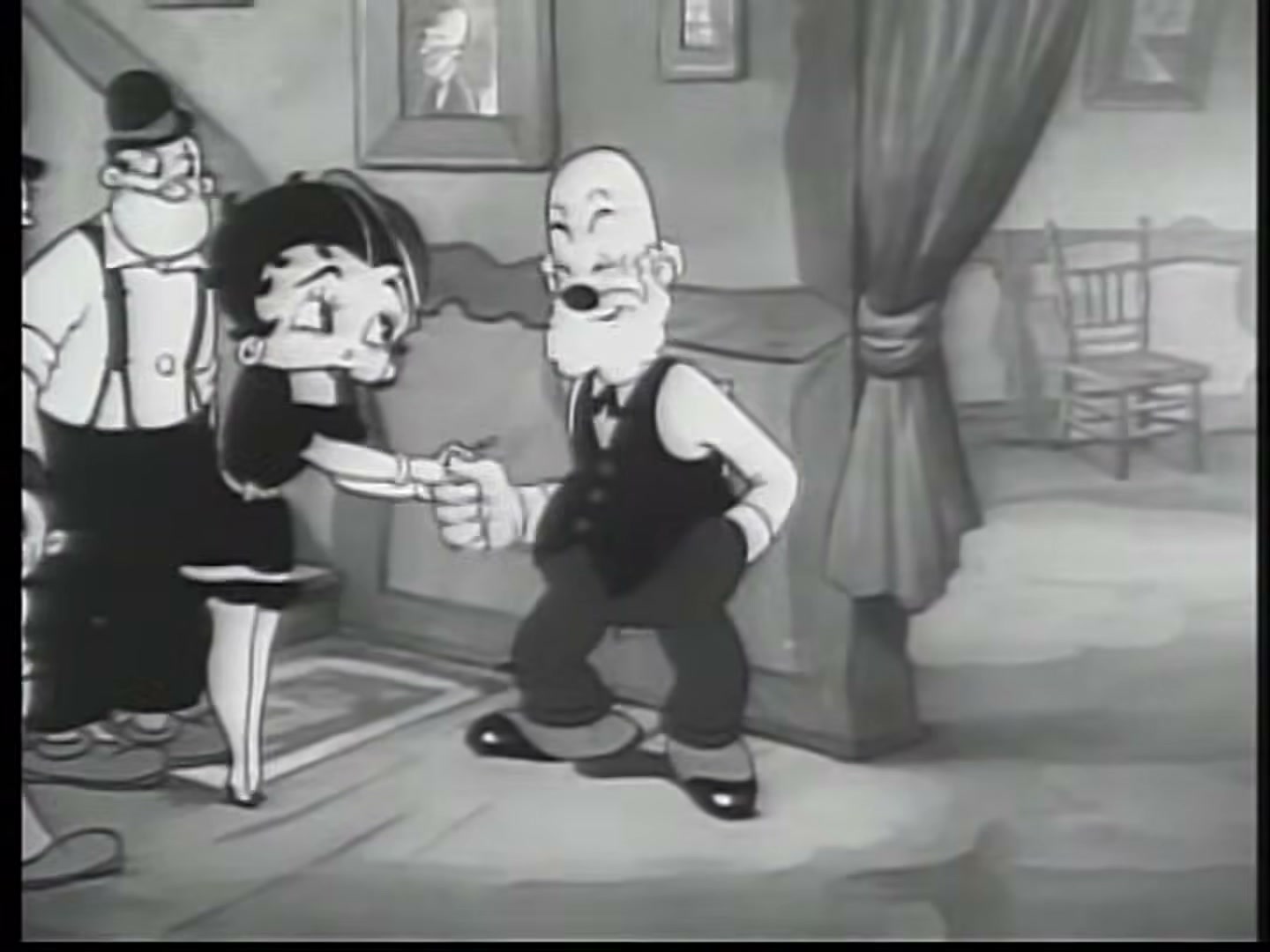
Betty receives an invitation to a party at the house of her elderly relative Grampy and sets off singing "I'm On My Way to Grampy's". On the way she is joined by two furniture movers, a fireman and a traffic policeman, all of whom drop what they are doing, a piano, a burning house, a traffic jam, to come along. Grampy is an inventor of the Rube Goldberg school. When the doorbell rings his whole house slides forward to meet the guests; his ceiling-lamp shade lowers to serve as a punch bowl; an old umbrella slices the cake into wedges. For entertainment he builds a band out of household objects, a stove, a sewing machine, a bedspring, which plays "Tiger Rag" by itself, and everyone dances until they collapse, except Grampy, who is still going at the fade.
Why It Matters
- Grampy, a bald, bearded old man with a thinking cap that lights up when an idea strikes, is the best character the Fleischers created for the post-Code Betty Boop series, and this first film sets the pattern: a problem, the cap, a cascade of improvised machines, a dance. His inventions are the Crazy Inventions of 1933 given a human face.
- The film is in the public domain in the United States, and it has been widely shown; Grampy appeared in ten further cartoons through 1937, and Everett Clark's cackling voice became as much a part of the series as Mae Questel's.
Notes and Trivia
- The thinking-cap gag, a mortarboard with a bulb, was borrowed by countless later cartoons.
- Jack Mercer, soon to be Popeye, supplies incidental voices.
- See also: Betty Boop's Crazy Inventions (1933), Grampy's Indoor Outing (1936), House Cleaning Blues (1937).


