
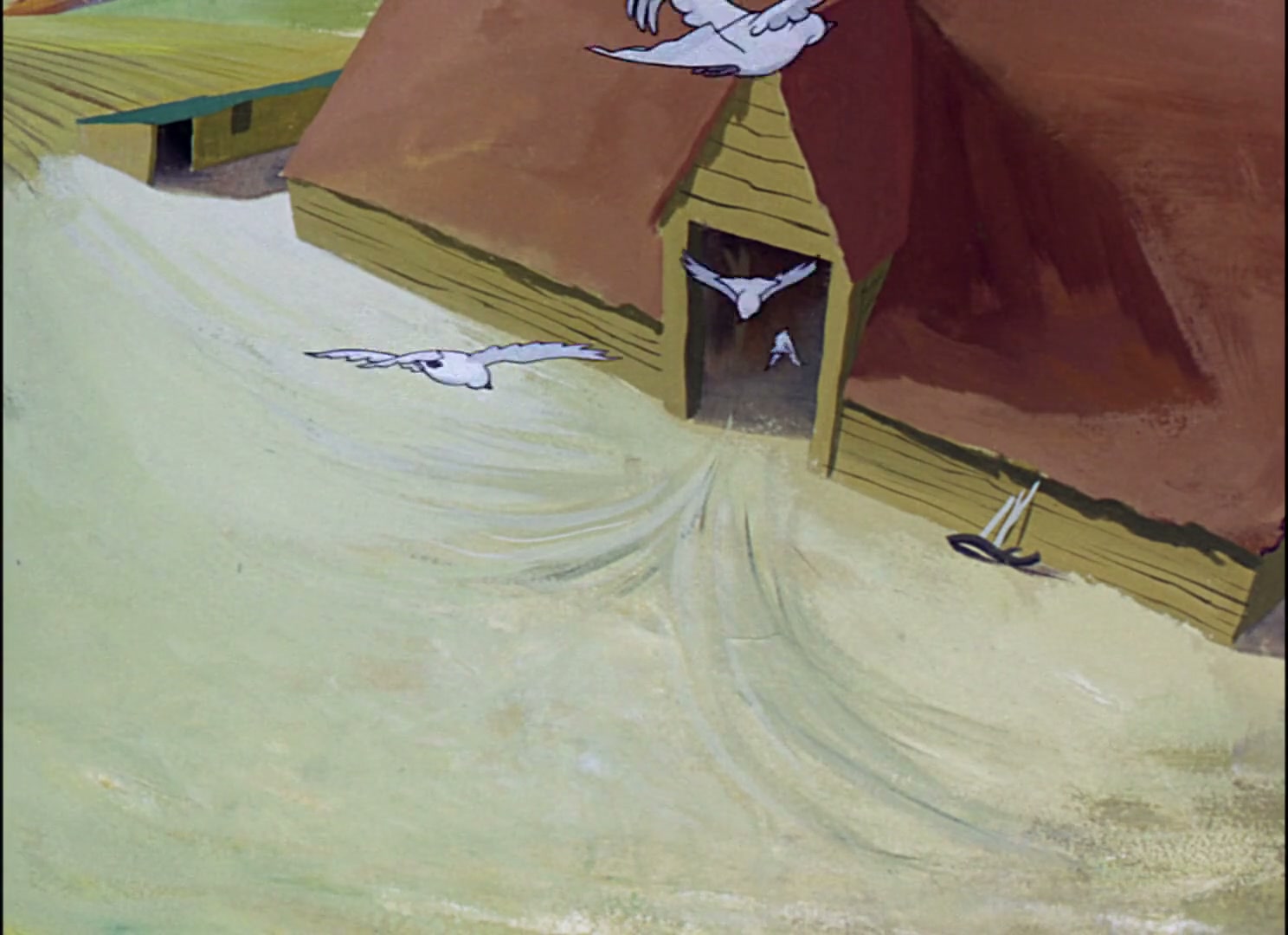
Studio: Halas and Batchelor
Short Plot Synopsis
Animal Farm adapts Orwell's farm allegory into an animated political drama. The animals' revolution, betrayal, and new oppression are staged with directness rather than musical softness.
The film is unusual because it uses animation for ideological argument at feature length. Its production history makes that argument even more complicated.
Why Is It Worth Watching?
- It is Britain's first animated feature and a landmark in Cold War political animation.
- It captures the 1950s shift from theatrical cartoon dominance toward television, widescreen features, sponsored films, and international festival culture.
- It helps connect famous landmarks to the everyday production patterns that surrounded them.
Legacy And Impact
Animal Farm matters as a Cold War animation artifact. It proves that feature animation could carry propaganda, literary adaptation, and adult political messaging.
In this book, Animal Farm earns its place because it helps explain a changing medium: old stars were being refined, modernist studios were challenging house styles, and feature animation was becoming more international.
It also gives this chapter a useful period marker, showing how a single release could carry studio habit, exhibition pressure, and changing audience expectations into a compact cartoon form.
Trivia
- The film was covertly shaped through CIA-linked funding, which makes its changed ending especially historically loaded.


