
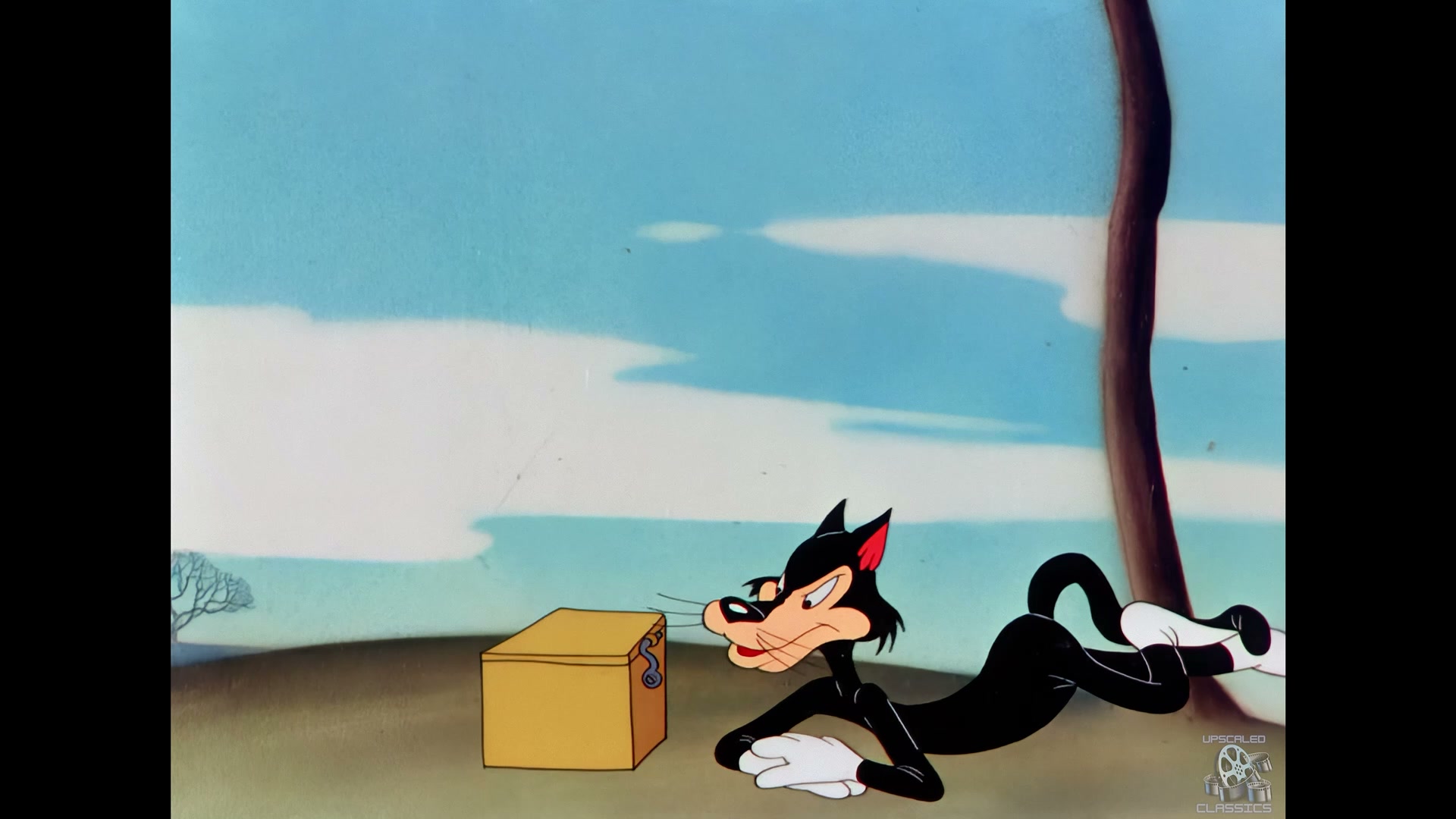
Studio: Leon Schlesinger Productions (Merrie Melodies)
Distributor: Warner Bros. Pictures
Produced by: Leon Schlesinger
Short Synopsis
Two cats, the tall, bossy Babbit and the short, dim Catstello, caricatures of Abbott and Costello, are after a baby bird in a nest at the top of a tree. Babbit does the planning and Catstello does the climbing, on stilts, on a ladder, fired from a seesaw, and each time the bird, a bald, pink, big-headed infant, deals with him: he pops Catstello's gas mask, bops him, and when Catstello pleads for his life the bird considers it and refuses. "I tawt I taw a puddy tat!" the bird announces, the first time the line was ever spoken. The blackout warden's "Turn out those lights!" interrupts the climax, and the two cats end the cartoon as battered as every cat who would follow them.
Why It Matters
- It is the debut of Tweety, here called Orson, a naked, aggressive pink baby bird based, Clampett said, on his own baby photographs, with the catchphrase already in place; the cats are among the best celebrity caricatures the studio did, with Tedd Pierce as Babbit and Mel Blanc's Costello. Rod Scribner's wild, distorting animation is at its most unrestrained.
- The film entered the public domain in 1970 when United Artists failed to renew it, so Tweety's first design is itself in the public domain, an oddity much discussed by copyright lawyers. Tweety was tamed, feathered yellow and paired with Sylvester by Freleng in Tweetie Pie (1947).
Notes and Trivia
- Tweety's design had been used for a different baby bird in Clampett's Wacky Blackout earlier in 1942.
- Clampett made two more Tweety cartoons, Birdy and the Beast and A Gruesome Twosome, before leaving the studio.
- See also: Tweetie Pie (1947), The Hep Cat (1942), Birds Anonymous (1957).


