
Studio: Fleischer Studios (Color Classics)
Distributor: Paramount Pictures
Produced by: Max Fleischer
Short Synopsis
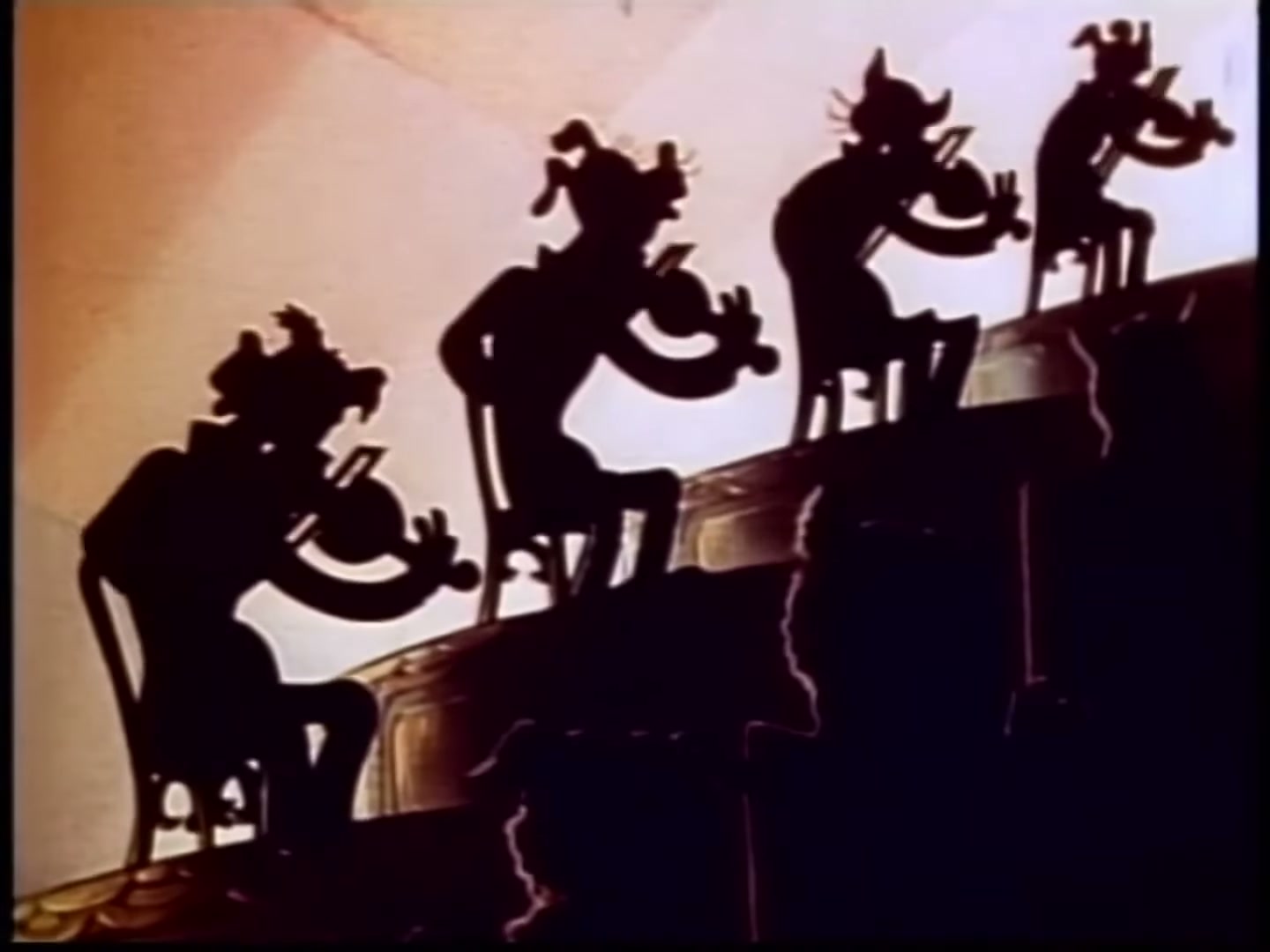
After credits set to Beethoven's Minuet in G, a lion in white tie steps up to conduct an orchestra of animals in Liszt's Second Hungarian Rhapsody. The players are not reliable. A dachshund plays the xylophone with his hind legs while the front half of him sleeps; monkeys use a flute as a pea-shooter on their colleagues; a horse trombonist, swatting a fly with his slide, keeps hitting the dog trumpeter in front of him. As the rhapsody quickens the musicians grow more violent, pranks become brawls, instruments become weapons, and the conductor, straining to keep the piece going, is finally brought down by a bass drum smashed over his head. The music stops, the lion gives up, and the cartoon ends.
Why It Matters
- The animal orchestra tearing through the Hungarian Rhapsody is the Fleischers' answer to Disney's The Band Concert, and a good one, with the orchestra's collapse timed to Liszt's accelerating tempo; the dachshund's divided body is one of the best single gags in the series, and the lion conductor is dignity itself.
- The cartoon is public domain in the United States, one of the Color Classics whose renewal was never filed. It is one of the few Fleischer cartoons scored to a single classical piece, a format the studio rarely used, and the seven animators, credited and uncredited, show the series getting more staff as Popeye's success paid for it.
Notes and Trivia
- The Second Hungarian Rhapsody became the most-used classical piece in cartoons, from Rhapsody Rabbit to The Cat Concerto.
- David Ross, the band leader's voice, was a radio announcer.
- See also: The Band Concert (1935), Peeping Penguins (1937), The Barnyard Concert (1930).


